Employment Documentation Is a Breach Readiness Control
Breach readiness does not start with the alert. It starts in the employment contract, the staff handbook and the policies that tell people what they are responsible for. Mark Fermor on why vague duties become the firm's problem.


Why it matters
What this means for organisations holding critical data
Breach readiness does not start with the alert. It starts in the employment contract, the staff handbook and the policies that tell people what they are responsible for. Mark Fermor on why vague duties become the firm's problem.
Breach response is often treated as something that starts after an incident. In practice, part of breach readiness starts much earlier. It starts with whether people understand their responsibilities before anything goes wrong.
Breach readiness starts before the breach
Most organisations treat breach response as something that begins when the alert fires. The plan sits with security. The playbook sits with legal. The retainer sits with an incident response firm. All of that matters. None of it addresses the months before the alert, when the people inside the business are quietly deciding, day by day, how carefully to handle information they were never explicitly told to protect.
If the documents that govern that behaviour are vague, the response will be vague too.
What the paperwork should actually say
Employment contracts, staff handbooks and internal policies should make it explicit how employees are expected to handle confidential information, how to report suspected incidents, which systems are approved for what work, and how to protect business data day to day.
Not a single clause buried on page forty. Named systems. Named data categories. Named reporting routes. Named consequences. A member of staff should be able to read the relevant section and understand, without a lawyer beside them, what they are allowed to do and what they are not.
Why this matters most in professional services
Legal, accountancy, wealth management, consultancy and advisory firms sit on client files, financial records, legal documents, identity data and commercially sensitive material every day. The person opening those files at nine in the morning is often the same person the regulator asks about at the enquiry.
When duties are vague, the firm carries the consequence. The regulator does not accept "we assumed they knew" as a control. Neither does a client whose confidential matter has ended up somewhere it should not.
Policies do not replace technical controls
To be clear, a handbook clause is not a substitute for security engineering. Physical severance, offline storage and role-based access controls limit what can be reached in the first place. That is the ceiling on the damage.
Documentation limits what people are permitted to do with what they can reach, and creates the accountability trail when something goes wrong. One without the other is half a control. Technical controls without documented duties leave you unable to attribute anything after the fact. Documented duties without technical controls leave the duties unenforceable.
The Firevault position
If a person has access to the crown jewels, their duties should not be vague.
The archival copy of client data, matter files, financial records and identity information should live on infrastructure that most staff cannot reach at all. The small number of people who can should have named, documented, auditable responsibilities for handling it. Firebreak enforces the technical severance at the network layer. The handbook enforces the human one on the desk. Both are required, and neither is optional in a professional services setting.
Mark Fermor, co-founder of Firevault, puts it plainly. The firms that recover well from an incident are the ones that already knew, on paper, exactly who was responsible for what. The firms that struggle are the ones still working out the answer in the middle of the fire.
What to review this quarter
- Check that the employment contract references confidential information handling in specific terms, not generic boilerplate.
- Check that the staff handbook names the approved systems and the incident reporting route, and that both are current.
- Check that access to the most sensitive archives is limited by role and documented per named individual.
- Check that leavers are removed from those systems the same day their notice ends, and that this is logged.
- Rehearse an incident where the first question is "who had access to this data on this date" and see how long the answer takes.
If any of those checks take more than a few minutes to satisfy, the paperwork is doing less work than it should be. Fix that before you need it.
How Firevault would handle this
Controls an auditor can physically verify
Firevault gives you physical separation, named custody and evidenced access, so compliance claims about isolation and control are things you can show, not just assert.
Related Reading
You may also find these useful

Airport WiFi sign-ups turn into a national data problem as 8.7 million customer records are accessed
Manchester Airports Group has confirmed that criminal hackers accessed the data of about 8.7 million customers across Manchester, East Midlands and London Stansted. New research shows no hacking was required: server-side marketing API keys sat in the public JavaScript of all three airport websites, unrotated, for more than four years.
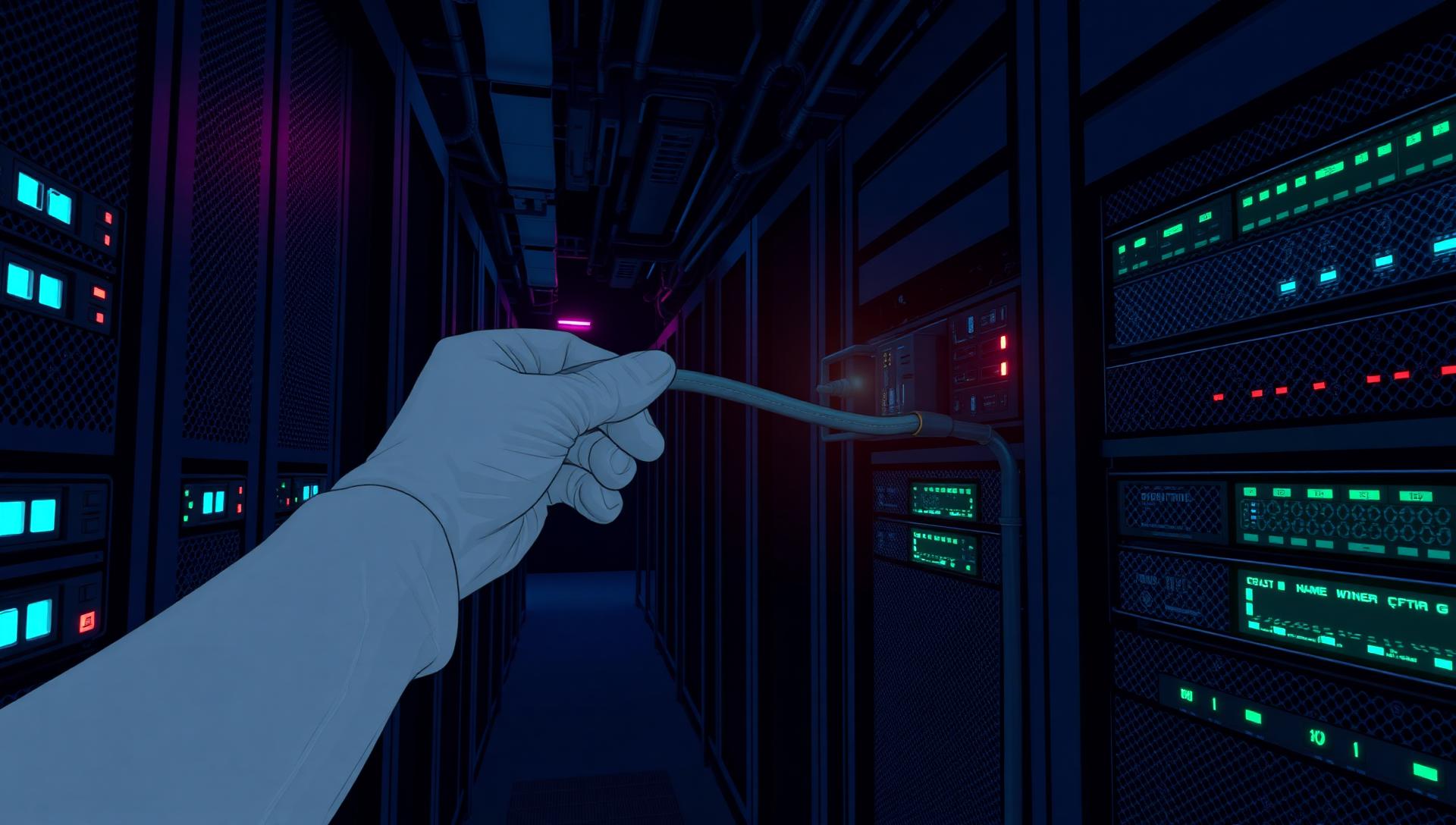
T-Mobile pulled the plug on Salt Typhoon. It took a car journey to get there.
T-Mobile's security chief ended months of failed software remediation by driving to the data centre, clearing ID, finding the cabinet and physically pulling the power supply from the compromised hardware. Disconnection was the right control. Firevault Control is designed to take the same action in under six milliseconds.

Beacon breach: 1,500 charities exposed and an HIV charity's health data stolen
People supported by a Manchester HIV charity have been told sensitive health information may have been stolen after a breach at Beacon, the shared database platform used by more than a thousand UK charities. One supplier, one connected database, national exposure.

Iran-linked hackers shut down a UK power plant for four days
A small British generator was taken offline for four days after an Iran-linked cyber attack, reported as the first successful intrusion of its kind against UK power generation. The grid held. The control layer did not.

GTA 6 leaks: a nightmare or a blip for the biggest video game of the year?
Unreleased Grand Theft Auto 6 footage has appeared online ahead of Rockstar's official preview, and Take-Two is now in court seeking the identities behind the accounts sharing it. The game will still sell. The material that leaked can never be unseen.

Nine PBS: 50 Terabytes of History Trapped by a Cloud Vendor That Closed
A public broadcaster lost access to fifty terabytes of archival footage, spanning seventy years of regional history, when its cloud storage supplier suddenly went out of business. The files are still trapped in a Denver data centre.