Rogue Wi-Fi at 35,000 Feet: What the Delta Flight 591 Incident Teaches About Network Trust
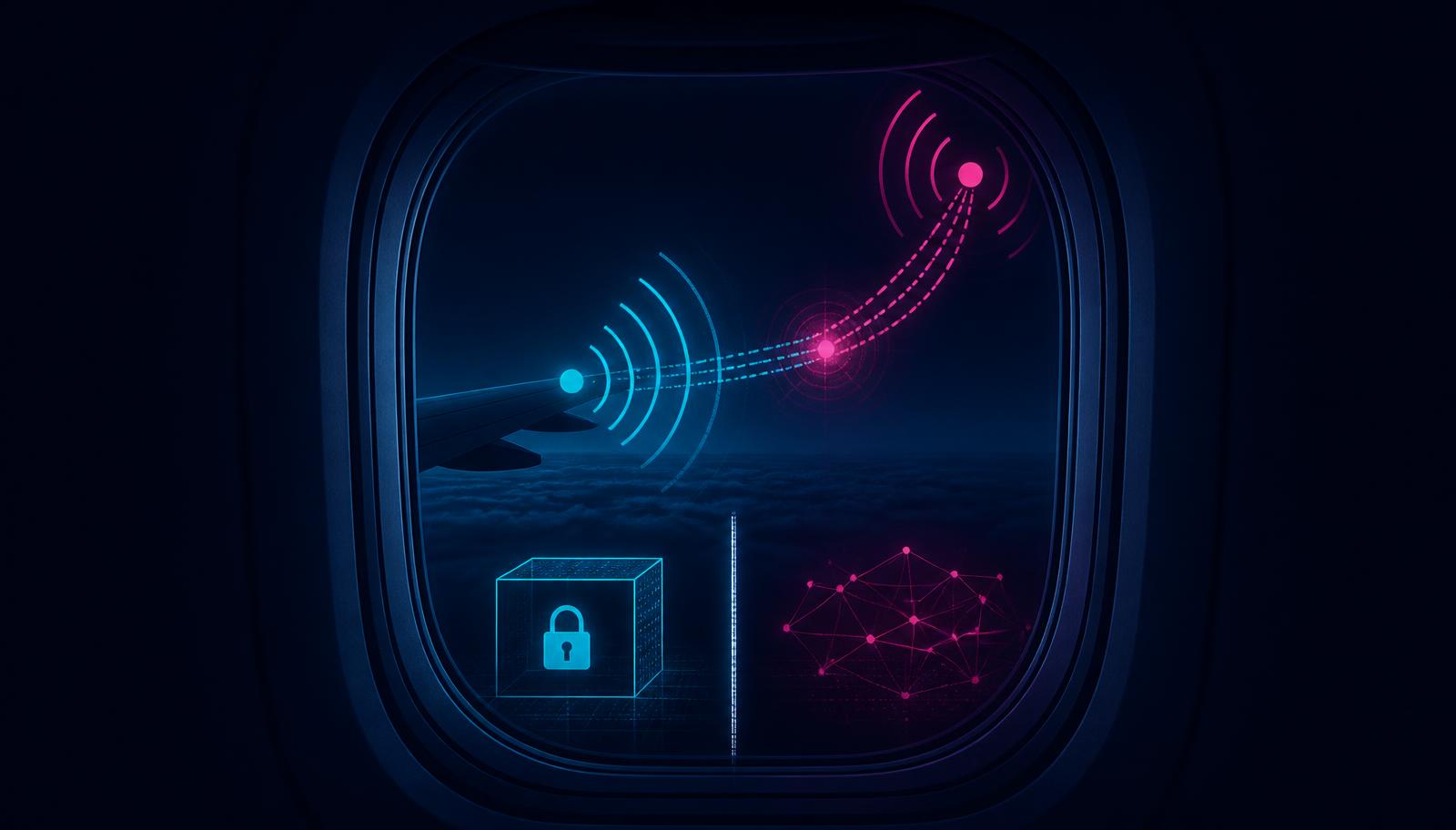
Delta Air Lines is investigating an unauthorised Wi-Fi network broadcast aboard Flight 591 from Las Vegas to Atlanta, alongside a deauthentication attack that knocked passengers off the aircraft network. The lesson is not about aviation. It is about how easily a trusted connection can be impersonated.

Why it matters
What this means for organisations holding critical data
Delta Air Lines is investigating an unauthorised Wi-Fi network broadcast aboard Flight 591 from Las Vegas to Atlanta, alongside a deauthentication attack that knocked passengers off the aircraft network. The lesson is not about aviation. It is about how easily a trusted connection can be impersonated.
Delta Air Lines is investigating an unauthorised Wi-Fi network that appeared aboard Flight 591 from Las Vegas to Atlanta on 10 August 2026. The aircraft was carrying passengers returning from the DEF CON 34 hacking conference. The incident was reported by BleepingComputer on 11 August 2026.
What Happened
Delta told BleepingComputer that an unauthorised wireless network, which was not provided, operated or supplied by Delta, was present onboard the aircraft for a short time during the flight. Cabin crew responded by deactivating the aircraft Wi-Fi for nearly 30 minutes. Delta stated that the incident did not affect the safety of passengers or aircraft operating systems, and that no emergency was declared with air traffic control. The aircraft was a Boeing 757 with six crew and 199 passengers.
According to crew messages sent through the Aircraft Communications Addressing and Reporting System and published by an aircraft technician, passengers were able to jam the aircraft Wi-Fi and broadcast a rogue network named "Delta WiFi Fast". One crew message read: "WE HAVE A PAX ON THIS HAS CREATED A SCAM WIFI CALLED DELTA WIFI FAST. WE BELIEVE THEY ARE TRYING TO SCAM THE OTHER PAX." A member of an online frequent flyer group reported that the fake network presented a phishing page collecting personal credentials and Google login data. Federal authorities and airport police boarded the aircraft after it docked, questioned the suspects and seized portable Wi-Fi hardware.
How the Attack Works
The technique is a Wi-Fi deauthentication attack. An attacker observes wireless traffic, identifies the access point address, then forges deauthentication frames that appear to come from the legitimate access point. Connected devices obey and disconnect. Sent continuously, those frames keep devices off the real network. The disconnection is rarely the objective. It is the setup. Once a device is off the legitimate access point, it will look for another one, and an evil twin network with a convincing name is waiting. Traffic is then intercepted or the user is sent to a credential harvesting page. Networks that enforce Protected Management Frames can mitigate spoofed management frames.
Why It Matters
Nothing about this attack required privileged access, a stolen password or a software vulnerability. It required proximity and a small radio. The network name did the rest. That is the uncomfortable point for every organisation whose staff work from airports, hotels, client sites and trains, because a corporate device that reconnects to a hostile access point is now inside an attacker controlled path, and the credentials it presents are real ones.
The same logic applies far beyond aviation. Any environment that treats an available connection as a trusted connection can be impersonated. Guest networks in offices, contractor links into operational sites and remote maintenance sessions all inherit the same weakness: the path is assumed to be safe because it is expected to be there.
The Firevault View
This incident is a small, vivid example of a design principle we return to constantly. A connection that exists can be impersonated, jammed or abused. A connection that does not exist cannot. Encryption and authentication protect what travels along a path. They do not question whether the path should be open at all.
Offline Secure Storage® takes the opposite starting point. Crown-jewel records, gold copies and retained archives sit on dedicated hardware that is physically disconnected when nobody has been authorised to use it. Access is granted for a session, verified, then withdrawn, so the reachable surface is a deliberate decision rather than a permanent condition. An attacker who succeeds in taking over a network path still reaches nothing, because the asset is not on a path.
For operational environments, the equivalent discipline is physical segmentation: zones that hold under pressure, with control paths that are separate from data paths and vendor access that exists only on demand. Our control blueprint for enforcing physical segmentation sets out how those zones are designed and evidenced, and controlling third-party access covers the vendor paths that so often stay open between visits. If you want the underlying model first, start with why Offline Secure Storage® exists and how #OSS works.
The question the Delta incident poses is worth asking about your own estate. If someone stood up a convincing fake network next to your people or your plant, what would still be reachable?
Sources
Where this reporting comes from
How Firevault would handle this
Access decided by you, not assumed by the network
Control by Firevault removes standing pathways and replaces them with connection windows you approve, so stolen credentials and compromised suppliers have nothing standing to abuse.
Related Reading
You may also find these useful
Dyfed-Powys Police confirms cyber attack as staff information may have been compromised
Dyfed-Powys Police has confirmed that a cyber attack identified on 14 September disrupted non-emergency systems and may have exposed staff information. The force says it has found no evidence that public data was accessed.
FBI investigates claims that hackers stole personnel and applicant data
The FBI is investigating unauthorised activity affecting its recruitment website after ShinyHunters claimed it stole sensitive records on current and former personnel and job applicants. The claimed scale remains unconfirmed.

Vulnerable children's health records caught up in HCRG Care Group cyber attack, families told 18 months later
Families of vulnerable children in Wiltshire, Bath and North East Somerset have been told their personal health information may have been accessed in a cyber attack on HCRG Care Group in February 2025, more than 18 months after the incident.

FBI and Coast Guard board oil tankers after suspected foreign cyberattacks on ships entering US waters
US authorities boarded two foreign-flagged oil tankers in the Gulf of Mexico after indications their networks were compromised by foreign cyber actors. Mark Fermor on why a ship is a floating lesson in what happens when operational technology is reachable.

FBI investigates 153 million drivers licenses put up for sale on a criminal forum
A dark web service claimed to be selling scans of more than 153 million drivers licenses, apparently taken from a Louisiana identity verification company used by household names. The FBI has opened an inquiry, and the case shows how long retention turns a routine check into national-scale exposure.

CenterPoint Energy confirms hackers stole customer data through an exposed API
CenterPoint Energy has confirmed that criminals stole customer data through one of its external facing systems, after a threat actor advertised 7.49 million files on a dark web forum. Mark Fermor on what an unsecured API says about the way critical infrastructure treats connected data.