
News · Breach Analysis
Hackers Kash in on FBI Director's Data
Iran-linked hacker group Handala Hack Team claims to have accessed FBI Director Kash Patel personal email, publishing personal photographs and correspondence online. The breach highlights why sensitive communications must be physically disconnected from the internet.

Mark FermorCTO, CMO and Founder, Firevault
Published 27 March 2026 · 4 min read
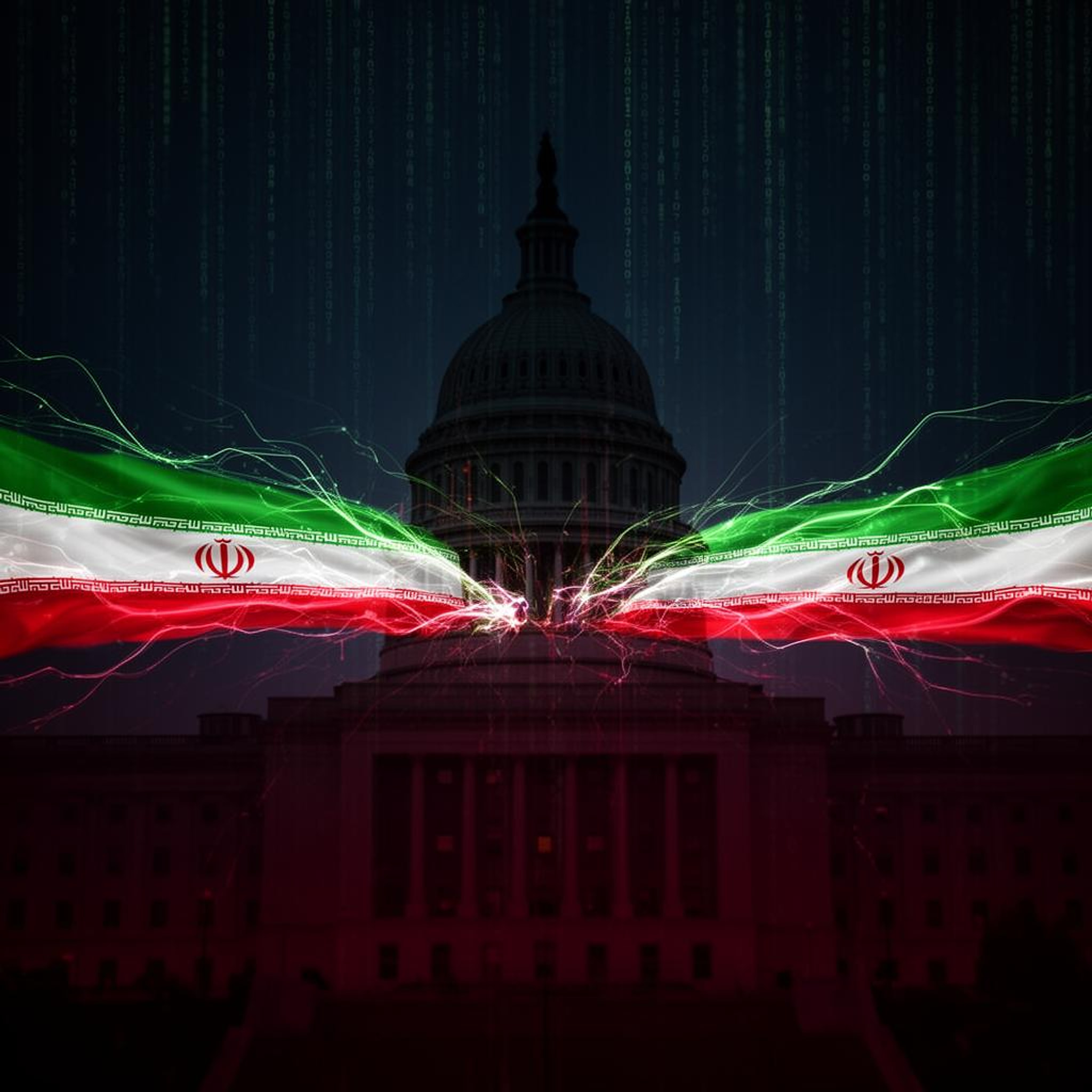
Cybersecurity visualisation depicting a state-sponsored cyber attack on US government infrastructure with Iranian-linked digital breach elements
Iran-linked hackers have claimed they accessed FBI Director Kash Patel's personal email inbox, publishing personal photographs and documents to the internet in what represents one of the most high-profile personal email breaches of a serving US law enforcement chief.
What Happened
On 27 March 2026, the hacker group known as the Handala Hack Team announced on their website that Patel "will now find his name among the list of successfully hacked victims." The group published a series of personal photographs of the FBI Director alongside what they claim is correspondence from his personal Gmail account spanning 2010 to 2019.
A US Department of Justice official confirmed that Patel's email had been breached and stated that the material published online appeared authentic. Reuters reported that the personal Gmail address Handala claims to have compromised matches the address linked to Patel in previous data breaches preserved by dark web intelligence firm District 4 Labs.
Who Is Behind the Attack
The Handala Hack Team, which describes itself as a pro-Palestinian vigilante hacking collective, is considered by Western cybersecurity researchers to be one of several personas operated by Iranian government cyberintelligence units. The group recently claimed responsibility for a separate attack on Michigan-based medical devices provider Stryker on 11 March, during which they allegedly deleted a significant volume of company data.
This is not an isolated incident. Iran-linked cyber operations have intensified throughout 2025 and 2026, with US authorities previously seizing domains associated with Handala earlier in March 2026, only for the group to restore operations shortly afterwards.
What Data Was Exposed
The leaked material reportedly includes personal photographs of Patel in informal settings, alongside what appears to be a mixture of personal and professional correspondence. The date range of the emails (2010 to 2019) suggests the breach may have exposed communications from Patel's time as a congressional staffer and his involvement in investigations related to the FBI's handling of the Trump-Russia enquiry.
The exposure of historical communications from a figure now leading the FBI represents a significant counterintelligence concern. Personal email accounts, unlike government systems, typically lack enterprise-grade security controls, multi-factor authentication enforcement, and monitoring capabilities.
Why This Matters
This breach underscores a persistent vulnerability in how senior officials and executives manage sensitive information. Personal email services, regardless of provider, remain connected to the internet at all times. They are indexed, backed up across multiple data centres, and accessible from any device with valid credentials.
The attack pattern is well established. Nation-state actors target personal accounts precisely because they sit outside the security perimeter of official government or corporate networks. Once credentials are compromised, whether through phishing, credential stuffing from prior breaches, or social engineering, the entire contents of an inbox become accessible.
For organisations handling sensitive correspondence, board communications, legal documents, or intellectual property, the lesson is clear: if data remains connected to the internet, it remains a target.
The Offline Alternative
Firevault's Layer 1 physical air gap architecture eliminates this attack vector entirely. By physically disconnecting storage from IP networks when not in active use, there is no persistent connection for attackers to exploit. Unlike cloud-based email services that maintain constant connectivity, physically isolated storage ensures that sensitive documents, correspondence archives, and critical records are unreachable by remote attackers.
The Patel breach is a textbook example of why the most sensitive materials require more than software-based security controls. When the FBI Director's personal email can be compromised by a state-sponsored hacking group, it demonstrates that no online service is immune. The only guaranteed defence against remote exfiltration is the removal of the network connection itself.
Key Takeaways
- Personal email remains a critical vulnerability. Senior officials and executives routinely use personal accounts for communications that, if exposed, carry significant reputational and security consequences.
- Nation-state actors target the weakest link. Iranian cyber units specifically targeted a personal Gmail account rather than attempting to breach FBI systems directly.
- Historical data carries present-day risk. Emails from 2010 to 2019 remain valuable to adversaries when the individual now holds one of the most powerful law enforcement positions in the world.
- Cloud-based email offers no physical protection. Gmail, Outlook, and similar services are always online, always accessible, and always a potential target for credential-based attacks.
- Physical disconnection is the only absolute safeguard. Firevault's air gap approach ensures that archived communications and sensitive documents cannot be reached by any remote attacker, regardless of their sophistication or state backing.
Sources and reporting notes
- reuters.comPrimary reporting referenced in this analysis.
Incident facts are attributed to the named sources; the recommendations and product discussion are Firevault analysis by Mark Fermor.
About the author
Mark FermorCTO, CMO and Founder of Firevault. Mark writes on physical control, offline storage and the incidents that show why both matter.

Why #OSS
Keep a clean copy out of reach.
Offline Secure Storage® keeps one copy physically disconnected at the hardware level between sessions.

Control
Govern the paths attackers depend on.
Physical, out-of-band control of selected network paths, composed into ten Blueprints.

Ready to start?
Create your Vault online.
Business Vaults from £360 a month inc VAT, on a 36-month commitment.