Iran-linked hackers shut down a UK power plant for four days
A small British generator was taken offline for four days after an Iran-linked cyber attack, reported as the first successful intrusion of its kind against UK power generation. The grid held. The control layer did not.

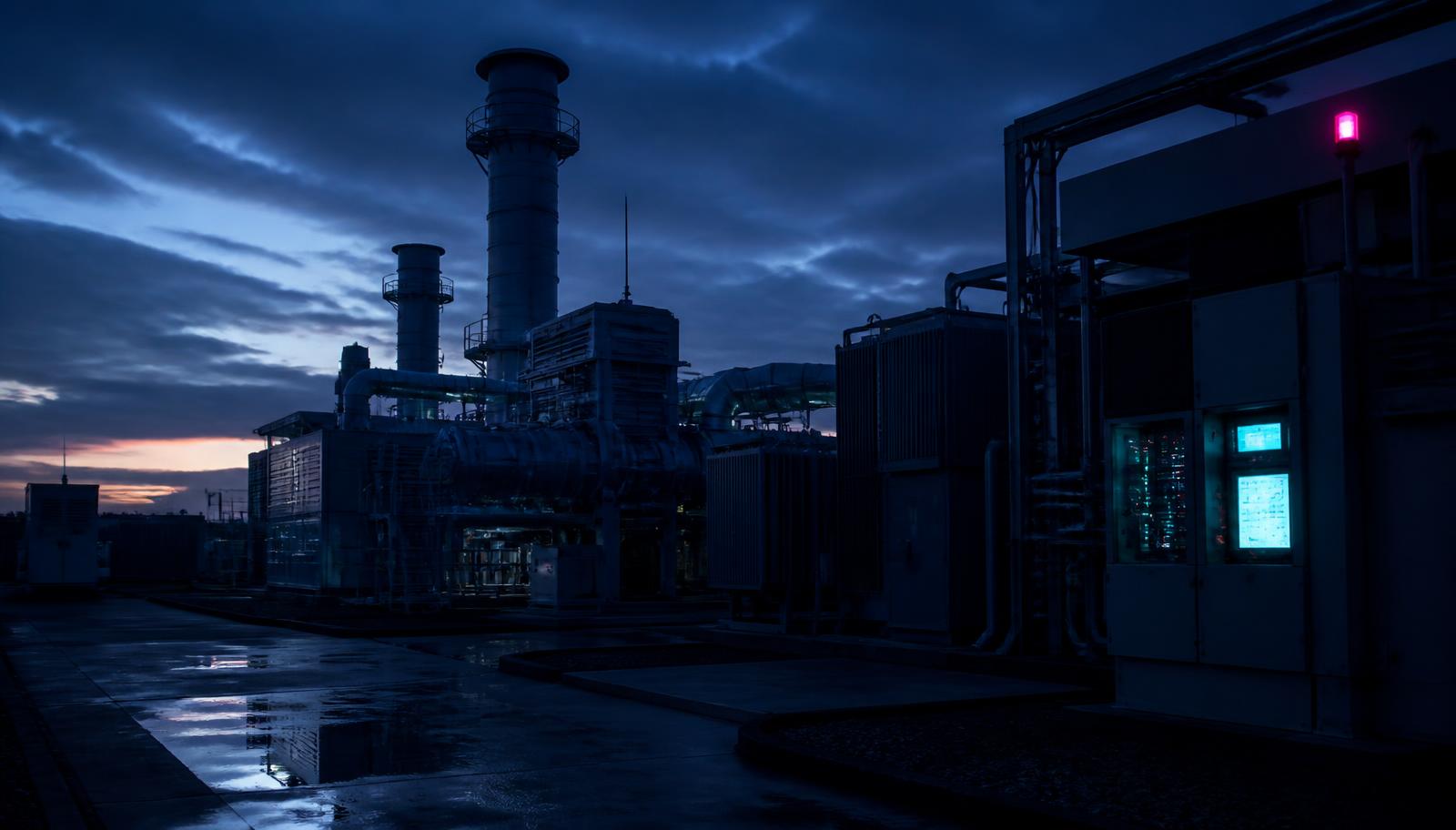
A small gas fired power generation plant at dusk with darkened control panels, illustrating the four day shutdown after an Iran linked cyber attack
On this page
What happened
A small power plant in the United Kingdom was shut down for four days following a cyber attack, according to reporting by The Telegraph, later covered by the BBC. The attack is attributed to hackers affiliated with the Iranian regime and is described as the first successful intrusion of its kind against British power generation.
Neither the government nor the National Cyber Security Centre has named the site, citing security reasons. The Department for Energy Security and Net Zero confirmed that the incident affected a small-scale generator and stated that at no point was there a risk to the wider energy system. The department has since contacted power companies to advise them on the risk of cyber attacks.
The affected asset is one of a number of smaller gas generators that provide short-term power to the network when demand requires it. The incident is reported to have taken place last month, at around the same time as a series of cyber attacks on water infrastructure in several United States jurisdictions.
Why a small generator matters
The reassurance offered is accurate and narrow. The national supply was never at risk, because one small generator is not the grid. That is a statement about scale, not about security.
What the incident demonstrates is that a hostile actor reached an operational technology environment and held it for four days. Four days is not a probe. It is dwell time, and it means the intruder had a working path into the systems that decide whether plant runs or stops. The same class of path exists across hundreds of distributed generation assets, water sites and industrial estates, most of which were connected for remote monitoring and maintenance rather than designed for adversarial conditions.
Small assets are also the easiest to reach. They tend to carry the same remote access convenience as large sites with a fraction of the security staffing, and they are frequently managed by third parties on shared platforms. A single supplier relationship can therefore become a route into many sites at once.
Iran and the wider pattern
Iran has long been regarded as a capable cyber power. The Western security community has expected activity of this type in connection with the conflict involving the United States this year, and until now there has been comparatively little of it against United Kingdom infrastructure. This incident, alongside the reported attacks on United States water systems, suggests that the intent has moved from signalling to execution.
Government policy is catching up. Cyber security regulation for the energy sector is being updated, and an energy resilience strategy is expected later this year.
The Firevault view
Mark Fermor, founder of Firevault, said: "Four days of lost generation is not a failure of monitoring. It is a failure of separation. If a remote path can start and stop plant, then whoever controls that path controls the plant, and no amount of detection changes that fact. Resilience begins by deciding which functions and which data are never reachable from a connected network."
There are two problems in this incident, and they need different answers.
The first is control of the operational layer. Remote access into generation, water and industrial systems is a business requirement, so the answer is not to remove it but to constrain it. Firevault Control enforces the boundary: defined access paths, enforced separation between the corporate network and the operational estate, and physical interlocks so that no single remote credential can command plant. The Firebreak® hardware range is built for exactly this environment, where availability and safety outrank convenience.
The second is the recovery position. When an operator loses confidence in an operational environment, the question becomes whether a clean, verified configuration and gold copy exists somewhere the attacker never touched. If the master copy sits on a network that shares any path with the compromised estate, the recovery is a negotiation rather than a restore. Offline Secure Storage® holds that copy physically disconnected, so a four-day outage becomes a controlled restoration instead of an open-ended investigation.
The plant was shut down for four days. With separation in place, that is an inconvenience. Without it, it is a rehearsal.

Sources
- The Telegraph, 22 August 2026: Iranian hackers shut down UK power plant
- BBC News, 23 August 2026: Iran-linked hackers behind cyber attack that shut down power plant, reports say
- Department for Energy Security and Net Zero statement as reported by the BBC
More from the Knowledge Vault

Airport WiFi sign-ups turn into a national data problem as 8.7 million customer records are accessed
Manchester Airports Group has confirmed that criminal hackers accessed the data of about 8.7 million customers across Manchester, East Midlands and London Stansted. New research shows no hacking was required: server-side marketing API keys sat in the public JavaScript of all three airport websites, unrotated, for more than four years.
Read analysis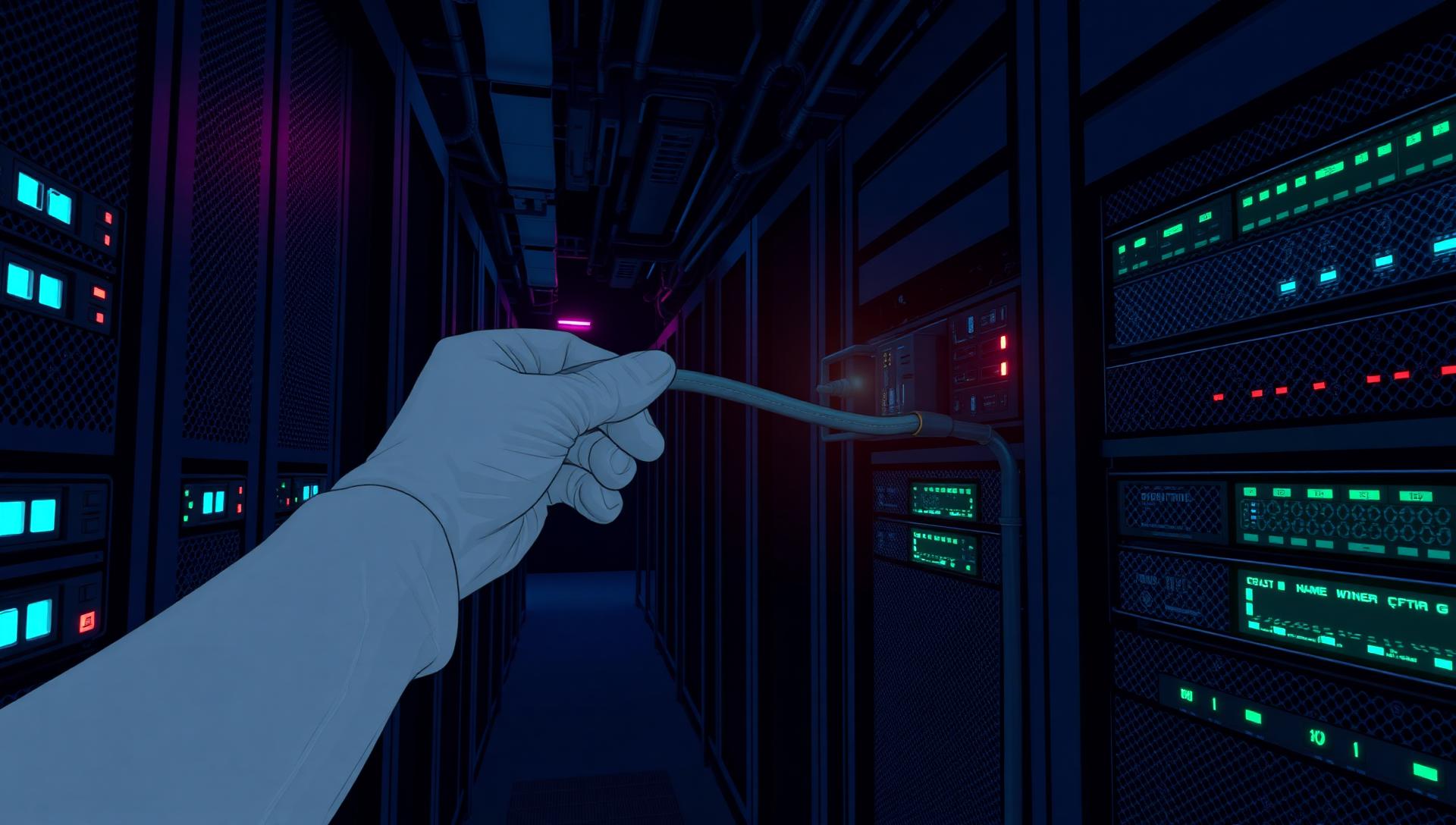
T-Mobile pulled the plug on Salt Typhoon. It took a car journey to get there.
T-Mobile's security chief ended months of failed software remediation by driving to the data centre, clearing ID, finding the cabinet and physically pulling the power supply from the compromised hardware. Disconnection was the right control. Firevault Control is designed to take the same action in under six milliseconds.
Beacon breach: 1,500 charities exposed and an HIV charity's health data stolen
People supported by a Manchester HIV charity have been told sensitive health information may have been stolen after a breach at Beacon, the shared database platform used by more than a thousand UK charities. One supplier, one connected database, national exposure.
GTA 6 leaks: a nightmare or a blip for the biggest video game of the year?
Unreleased Grand Theft Auto 6 footage has appeared online ahead of Rockstar's official preview, and Take-Two is now in court seeking the identities behind the accounts sharing it. The game will still sell. The material that leaked can never be unseen.
Nine PBS: 50 Terabytes of History Trapped by a Cloud Vendor That Closed
A public broadcaster lost access to fifty terabytes of archival footage, spanning seventy years of regional history, when its cloud storage supplier suddenly went out of business. The files are still trapped in a Denver data centre.

French tax authority breach exposes 678,000 taxpayers and the land registry behind them
France's Directorate General of Public Finances has confirmed that attackers used compromised access points to extract tax and cadastral data on 678,000 individuals and businesses. The same seller claims to have held a live session on the central land registry platform covering roughly 20 million people.