
News · Breach Analysis
Quinn Emanuel and McDermott breached as law firms become the soft route to client data
Two more major US law firms have disclosed social engineering breaches, joining Herbert Smith Freehills Kramer, Goodwin Procter and WilmerHale. One compromised user account was enough.

Mark FermorCTO, CMO and Founder, Firevault
Published 8 September 2026 · 4 min read
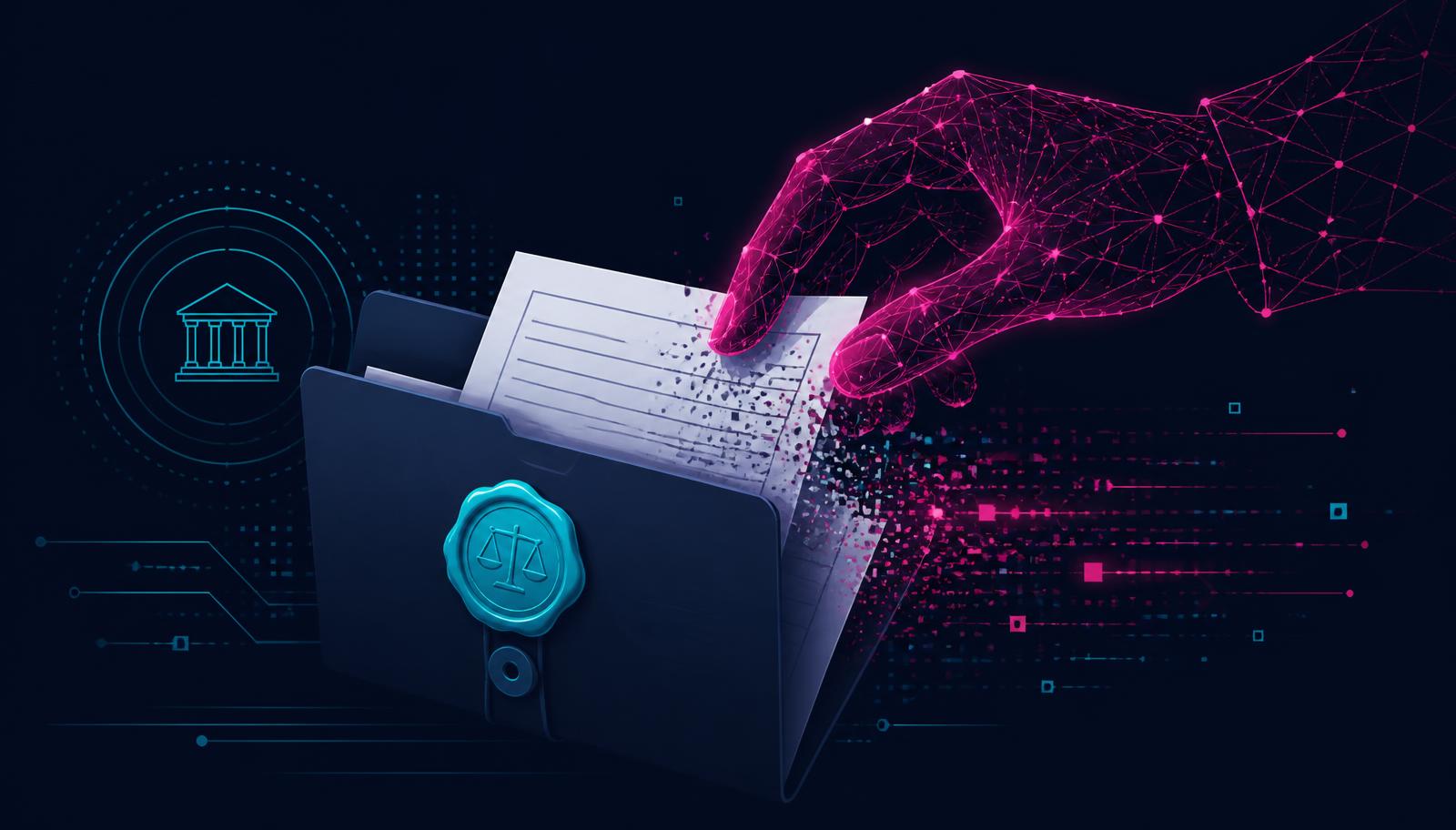
Illustration of a sealed legal document folder being opened by a hand made of network lines, representing law firm data breaches through social engineering
What happened
Quinn Emanuel and McDermott Will & Emery, two of the most prominent law firms in the United States, both confirmed data breaches on 3 September 2026 and said they had notified law enforcement. It is not clear who was responsible for either incident, or whether the two were connected.
Quinn Emanuel described "a data security incident involving unauthorized access to stored files for a single software application through one temporarily compromised user account". The firm said a limited number of client documents were affected, that affected parties have been informed, and that there is no ongoing unauthorised access.
In a letter dated 25 August, seen by Reuters, Quinn Emanuel told a lawyer for the short seller Muddy Waters that an unauthorised third party had obtained access through social engineering on 14 August, and that some of the exposed material involved Muddy Waters files the firm had obtained through a lawsuit in Florida.
McDermott reported its breach to the Vermont attorney general and said the exposed files included Social Security numbers and health data. The firm called it "an isolated social engineering incident involving a single user and a limited number of documents", said it worked with external cyber security experts and law enforcement, and that the matter has been resolved.
Not isolated incidents
The two disclosures follow a run of similar cases. Herbert Smith Freehills Kramer and Goodwin Procter both disclosed breaches to US state regulators in August, and WilmerHale was sued in a proposed class action in July over a breach affecting the firm.
Law firms hold what attackers actually want: merger plans, litigation strategy, regulatory exposure, personal data of executives and, as McDermott's filing shows, Social Security numbers and health records. They hold it on behalf of hundreds of clients at once, which makes a single firm a more efficient target than any one of those clients.
The pattern worth noticing
Both firms used the same phrase: social engineering. Neither described a zero-day exploit or a failure of encryption. In each case a person was persuaded, one account was taken, and documents left the building.
That has three consequences for anyone who instructs outside counsel:
- Your data leaves your control the moment you send it. Your own segmentation, monitoring and patching stop at your perimeter. Your legal files do not.
- One account is enough. Both firms stressed that a single user was involved. That is offered as reassurance, but it is also the finding: document stores are commonly reachable in full by ordinary accounts.
- "The matter has been resolved" rests on evidence. Scope statements, notification decisions and any later class action all depend on records of who accessed what and when.
The Firevault view
Offline Secure Storage® does not prevent social engineering. A convincing message to a busy lawyer is a people and process problem, answered by verification habits, phishing-resistant authentication and tighter document permissions.
What Offline Secure Storage® changes is the scope of the loss and the reliability of the record. A firm that keeps its complete document estate live and reachable will lose whatever a compromised account can see. A firm that holds closed matters, archived client files and audit logs offline and immutable narrows the reachable surface to current work, and keeps the access records that determine notification duty beyond the reach of anyone still inside the estate.
Mark Fermor, Director and Co-Founder of Firevault, said: "Every one of these firms is well resourced and well advised, and still lost documents to a single borrowed account. If your archive is online, your archive is in scope. Take the closed matters offline and the same intrusion costs a fraction of what it costs today."
Source
Questions
Quinn Emanuel and McDermott Will & Emery disclosed breaches on 3 September 2026. Herbert Smith Freehills Kramer and Goodwin Procter disclosed breaches to US state regulators in August, and WilmerHale was sued in a proposed class action in July over a breach.
Both firms described social engineering. Quinn Emanuel said access came through one temporarily compromised user account to a single software application, and McDermott described an isolated incident involving a single user.
Quinn Emanuel said a limited number of client documents were affected, including files relating to the short seller Muddy Waters. McDermott told the Vermont attorney general that the exposed files included Social Security numbers and health data.
They hold confidential business and personal data for hundreds of clients in one place, including deal plans, litigation strategy and sensitive personal records. Breaching one firm reaches many organisations at once.
Ask which of your documents remain reachable from ordinary user accounts, how closed matters are archived, whether authentication is phishing-resistant, and how access logs are retained and protected from alteration.
No. Social engineering is a people and process problem. Offline Secure Storage limits how much is reachable when an account is compromised by holding closed matters and archives offline, and keeps audit records immutable so the scope of an incident can be proven.
Sources and reporting notes
- reuters.comPrimary reporting referenced in this analysis.
Incident facts are attributed to the named sources; the recommendations and product discussion are Firevault analysis by Mark Fermor.
About the author
Mark FermorCTO, CMO and Founder of Firevault. Mark writes on physical control, offline storage and the incidents that show why both matter.

Why #OSS
Keep a clean copy out of reach.
Offline Secure Storage® keeps one copy physically disconnected at the hardware level between sessions.

Control
Govern the paths attackers depend on.
Physical, out-of-band control of selected network paths, composed into ten Blueprints.

Ready to start?
Create your Vault online.
Business Vaults from £360 a month inc VAT, on a 36-month commitment.