Gunra ransomware hits critical infrastructure via Fortinet flaws
CISA, the FBI, the NSA and partner agencies have warned that Gunra ransomware affiliates are exploiting known Fortinet authentication bypass flaws to reach critical infrastructure networks, then stealing and encrypting data.

Why it matters
What this means for organisations holding critical data
CISA, the FBI, the NSA and partner agencies have warned that Gunra ransomware affiliates are exploiting known Fortinet authentication bypass flaws to reach critical infrastructure networks, then stealing and encrypting data.
According to reporting by The Register, United States cyber agencies have warned critical infrastructure operators to patch internet facing equipment after affiliates of the Gunra ransomware operation were observed exploiting known vulnerabilities to break into networks. The joint advisory was issued by CISA, the FBI, the NSA, the Secret Service and partner agencies in the United States and South Korea.
What happened
Gunra first surfaced in 2025 and now operates as ransomware as a service, with affiliates attacking organisations worldwide. Reported targets include healthcare, financial services, government, professional services, nonprofit organisations and other critical infrastructure operators.
The advisory states that affiliates have exploited CVE-2024-55591 and CVE-2025-24472, authentication bypass flaws in Fortinet FortiOS and FortiProxy, to gain administrative access through internet facing appliances. Once inside, the group follows the familiar double extortion playbook: steal data, encrypt systems, then demand payment for a decryptor and for a promise not to publish the stolen material. Negotiations take place through a Tor based portal, with victims typically given between five and seven days before their data is published.
Trend Micro first observed Gunra in April 2025, initially targeting Windows systems and borrowing elements from the Conti ransomware operation. A Linux variant was later uncovered that can run as many as 100 encryption threads in parallel, supports partial encryption of individual files, and can store RSA encrypted keys in separate keystore files. Activity has been seen in Turkey, Taiwan, the United States and South Korea, while the group leak site also claims victims in Brazil, Japan and Canada, including manufacturers, healthcare providers, technology companies and law firms.
What this means for the sector
The pattern is now well established. The entry point is not a novel exploit but a known, published vulnerability in an internet facing appliance that has not been patched. The edge device is the front door, and once administrative access is obtained the attacker moves quickly to identify and destroy the recovery position before making a demand.
That last point is the one most operators underestimate. Backups that are reachable over the network, including cloud replicas and network attached storage, are part of the same connected estate as the systems being encrypted. If an attacker holds administrative credentials, those copies can be altered, encrypted or deleted in the same intrusion. The five to seven day negotiation window described in the advisory only carries weight when the victim has no clean copy of its own to fall back on.
It is also worth noting the sectors involved. Healthcare, government, financial services, professional services and manufacturing all share one characteristic: downtime carries an immediate cost in service delivery, not just in revenue. Recovery speed, and confidence in the integrity of what is recovered, decides how long that cost runs.
The Firevault view
The agencies close their advisory with a short list of practical measures: patch known exploited vulnerabilities in internet facing systems, protect VPN gateways and remote desktop access with multifactor authentication, segment networks, and maintain offline, immutable backups. The final item is the one that determines the outcome once prevention has already failed.
Offline Secure Storage® (#OSS) exists for that scenario. A vault is physically disconnected by default, so the data inside it is not present on any network an intruder can reach. Access is enabled deliberately by the account holder, and every session is recorded. Mark Fermor, senior editor at Firevault, notes that the value of a physically disconnected copy is simple to state: an attacker with full administrative control of a connected estate still cannot reach a drive that is not connected to anything. #OSS does not prevent an initial intrusion through an unpatched appliance, and it is not presented as doing so. What it removes is the leverage, because the organisation retains a clean and unalterable copy of the records that matter.
What to do next
Operators of critical infrastructure and their suppliers should treat this advisory as a prompt to review both prevention and recovery:
- Inventory every internet facing appliance and confirm that CVE-2024-55591 and CVE-2025-24472 have been remediated on all Fortinet FortiOS and FortiProxy instances.
- Enforce multifactor authentication on VPN gateways and remote desktop access, and remove standing administrative access from accounts that do not require it.
- Test whether any current backup copy can be reached, modified or deleted using credentials held on the production network. If it can, it is not a recovery position.
- Hold a physically disconnected copy of critical records and system images in Offline Secure Storage® (#OSS), and rehearse restoring from it rather than assuming it will work.
- Segment networks so that a compromised edge appliance does not grant a route into operational technology environments.
Source: The Register, 11 August 2026, and the joint advisory published by CISA.
Sources
Where this reporting comes from
How Firevault would handle this
A recovery copy an attacker cannot reach
Offline Secure Storage® keeps a clean copy of your data on hardware that is physically disconnected, so backup and recovery do not depend on systems an intruder can touch.
Related Reading
You may also find these useful

Airport WiFi sign-ups turn into a national data problem as 8.7 million customer records are accessed
Manchester Airports Group has confirmed that criminal hackers accessed the data of about 8.7 million customers across Manchester, East Midlands and London Stansted. New research shows no hacking was required: server-side marketing API keys sat in the public JavaScript of all three airport websites, unrotated, for more than four years.
T-Mobile pulled the plug on Salt Typhoon. It took a car journey to get there.
T-Mobile's security chief ended months of failed software remediation by driving to the data centre, clearing ID, finding the cabinet and physically pulling the power supply from the compromised hardware. Disconnection was the right control. Firevault Control is designed to take the same action in under six milliseconds.
Beacon breach: 1,500 charities exposed and an HIV charity's health data stolen
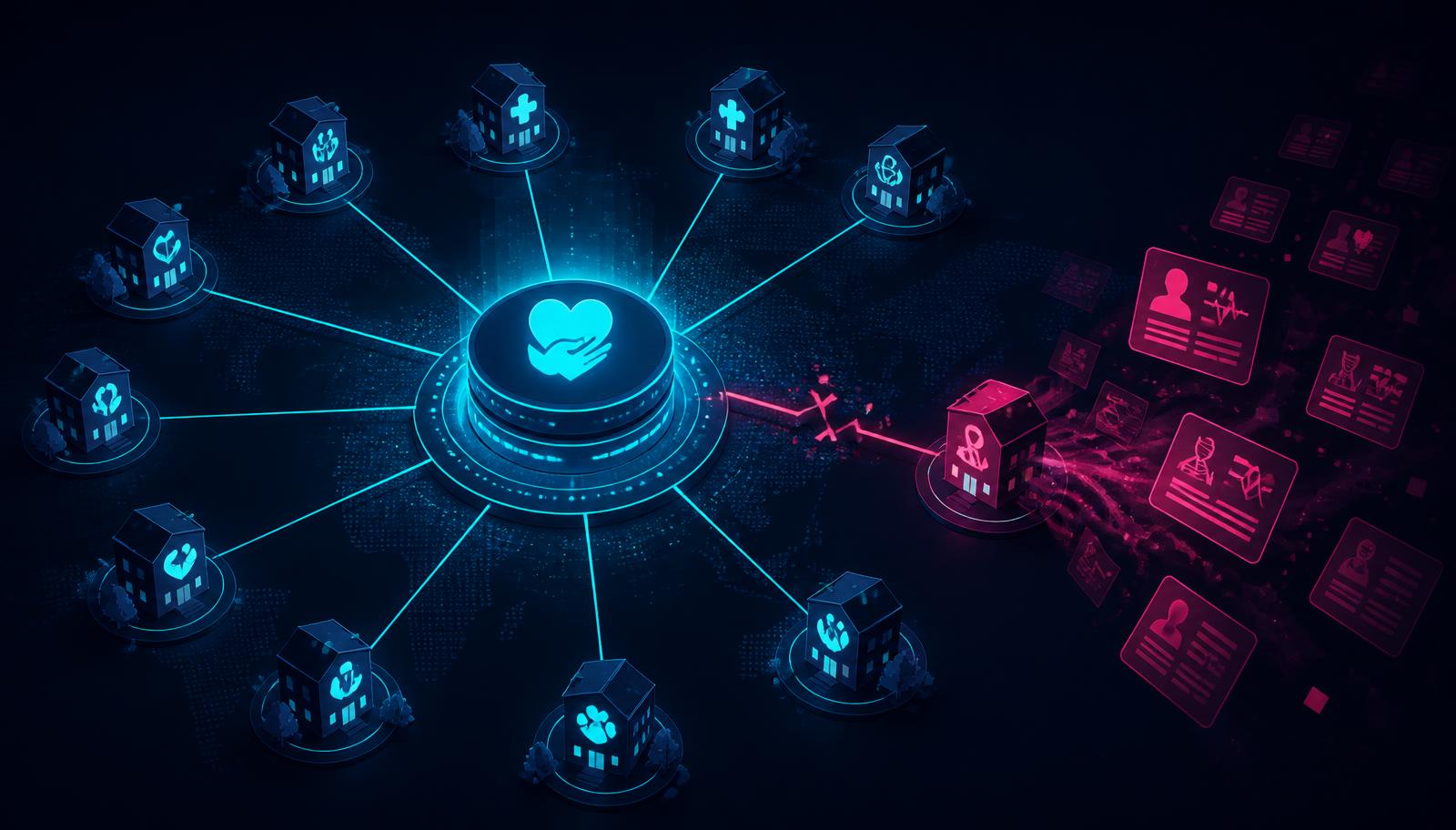
People supported by a Manchester HIV charity have been told sensitive health information may have been stolen after a breach at Beacon, the shared database platform used by more than a thousand UK charities. One supplier, one connected database, national exposure.
Iran-linked hackers shut down a UK power plant for four days
A small British generator was taken offline for four days after an Iran-linked cyber attack, reported as the first successful intrusion of its kind against UK power generation. The grid held. The control layer did not.

GTA 6 leaks: a nightmare or a blip for the biggest video game of the year?
Unreleased Grand Theft Auto 6 footage has appeared online ahead of Rockstar's official preview, and Take-Two is now in court seeking the identities behind the accounts sharing it. The game will still sell. The material that leaked can never be unseen.

Nine PBS: 50 Terabytes of History Trapped by a Cloud Vendor That Closed
A public broadcaster lost access to fifty terabytes of archival footage, spanning seventy years of regional history, when its cloud storage supplier suddenly went out of business. The files are still trapped in a Denver data centre.