Buyer's Guide: IT Directors and Infrastructure
An infrastructure leader's guide to completing the 3-2-1-0 backup strategy with offline secure storage. Learn how physical air-gap protection ensures recovery capability that ransomware cannot defeat.
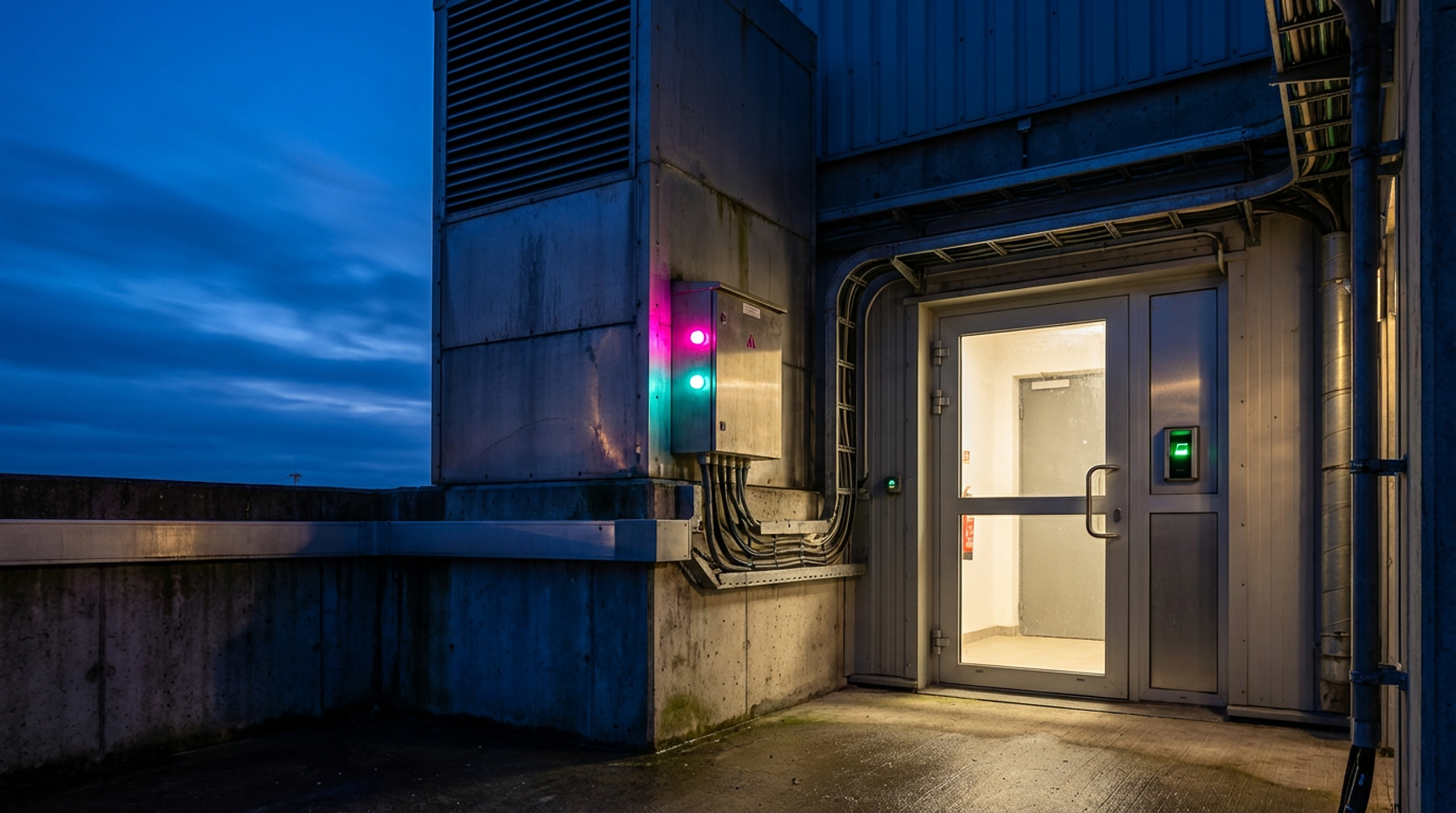
Article record
Why it matters
What this means for organisations holding critical data
An infrastructure leader's guide to completing the 3-2-1-0 backup strategy with offline secure storage. Learn how physical air-gap protection ensures recovery capability that ransomware cannot defeat.
1. Why This Guide Exists
Firevault has created a world-first offline secure storage platform that physically controls connectivity to identity-locked and isolated hard drives. This is not cloud. This is not software. This is not an application. It is architecture that removes reachability as an attack vector.
This guide exists because infrastructure leadership is now indistinguishable from crisis leadership. The 2024 Veeam Ransomware Trends Report found that 93% of ransomware attacks target backup repositories. When your backup infrastructure is compromised, recovery is not delayed, it is impossible.
The infrastructure reality: You maintain 99.99% uptime for years. Then ransomware encrypts production and backups simultaneously, and you discover that your recovery capability was reachable from the same network as the threat. All that uptime becomes irrelevant when recovery is impossible.
This guide helps you evaluate offline secure storage as the recovery infrastructure that survives when everything else fails, because at some point, everything else will fail.
2. Your Role and Your Data
As an IT Director or Head of Infrastructure, you own the systems everyone else depends on. You are the invisible foundation, noticed only when something breaks. When breach occurs, you are the person expected to restore service, recover data, and explain why recovery is taking so long.
The infrastructure assets that determine survival:
- Backup repositories: The data that enables recovery, and the first target for sophisticated ransomware
- Active Directory / Entra ID: The identity infrastructure everything depends on, compromise here is game over
- Virtualisation infrastructure: Hypervisors, management platforms, configuration, compromise the foundation, compromise everything
- Recovery credentials: The passwords, keys, and secrets needed to restore systems, often stored in those same systems
- Configuration baselines: Golden images, IaC repositories, system configurations, the blueprints for rebuilding
The infrastructure paradox: Every system designed for high availability is designed for high reachability. Your backup appliance has a management interface. Your virtualisation platform has a control plane. Your monitoring system accepts inbound connections. The same connectivity that enables management enables attack.
3. The Threats That Target Infrastructure First
Sophisticated attackers understand that infrastructure is the skeleton key:
Attack VectorInfrastructure ImpactWhy Recovery Fails Ransomware targeting backups93% of attacks target backup repositories first (Veeam 2024)Backups encrypted before production; no recovery path Active Directory compromiseDCSync attacks extract all credentials; Golden Ticket enables persistent accessCannot trust any system; rebuild required from scratch Hypervisor attacksESXi ransomware variants target management plane directlyAll VMs encrypted simultaneously; no layered recovery Credential theftService accounts with broad access enable lateral movementAttackers have same access as infrastructure team Management plane compromisevCenter, SCCM, Ansible, management tools become attack toolsThe tools you need to recover are compromisedThe Kaseya lesson: In July 2021, REvil ransomware deployed through Kaseya VSA, the remote monitoring and management tool, to 1,500 organisations. The attack used the infrastructure management tool as the delivery mechanism. The tool designed to manage and protect infrastructure became the weapon against it.
The Change Healthcare lesson: In February 2024, the BlackCat ransomware attack on Change Healthcare disrupted healthcare payments across the United States for weeks. Recovery was not just slow, it required rebuilding infrastructure from scratch because backup and recovery systems were compromised.
The infrastructure question: If your backup, identity, virtualisation, and management infrastructure are all reachable from the same compromised network position, what exactly survives an attack? Offline secure storage is the answer.
4. How Human Error Defeats Infrastructure Resilience
Infrastructure teams work under pressure with complex, interconnected systems:
- Backup testing gaps: 58% of backup recoveries fail under real conditions (Veeam 2024). The first real test is during the ransomware attack.
- Credential sprawl: Service accounts with domain admin, API keys that never rotate, passwords in scripts and documentation.
- Configuration drift: Production diverges from documentation. Recovery procedures reference systems that no longer exist as described.
- Incomplete offboarding: Former administrators retain access through service accounts, VPN credentials, or undocumented access paths.
- Emergency access exceptions: "Temporary" access grants that become permanent. Break-glass credentials that are never rotated.
The uncomfortable truth: Every infrastructure shortcut, every deferred maintenance item, every "temporary" exception becomes an attack vector when adversaries are inside your network. Technical debt is security debt.
Resilience principle: Offline secure storage assumes human error is inevitable. Backup testing will be incomplete. Credentials will be exposed. Recovery procedures will be outdated. Physical disconnection ensures that recovery assets survive regardless of operational imperfection.
5. The Infrastructure Architecture That Will Fail
Modern infrastructure is designed for efficiency and manageability, qualities that create attack surface:
Centralised management: vCenter, SCCM, Ansible, Puppet, single pane of glass for management is single point of failure for attack. Compromise the management plane, compromise everything it manages.
Shared authentication: Active Directory providing SSO across infrastructure. Service accounts with broad access for automation. Domain admin credentials stored in password managers on domain-joined systems. Compromise identity, compromise all.
Network-attached backup: Backup appliances with management interfaces on the same networks as production. Replication to secondary sites using credentials that exist in Active Directory. Ransomware that understands backup APIs.
Cloud-connected everything: On-premises infrastructure with cloud management. SaaS backup solutions with persistent API access. Hybrid designs that extend attack surface to the internet.
The infrastructure challenge: Can you identify a single recovery asset that cannot be reached from a compromised workstation with stolen domain admin credentials? If not, your recovery architecture has a single point of total failure. Offline secure storage eliminates that failure mode.
6. The Skills Reality
Infrastructure teams are stretched across ever-expanding scope:
- Multi-platform complexity: On-premises, multiple clouds, containers, serverless, no one person understands it all
- Security vs. operations tension: Security requirements conflict with operational efficiency; shortcuts happen
- 24/7 coverage: Critical decisions made by whoever is on call, not necessarily the most experienced person
- Documentation debt: Systems documented by people who have left; recovery procedures untested
- Tool sprawl: Dozens of management tools, each with its own security model and credential store
The 3am reality: When the ransomware alert fires at 3am, the response depends on whoever answers the phone. They are tired, stressed, and making decisions with incomplete information. Your infrastructure must survive their worst decision under maximum pressure.
Operational principle: Offline secure storage does not require correct decision-making under pressure. Physical disconnection is a state, not a procedure. Recovery assets are either offline or they are not. The system does not depend on human judgement during crisis.
7. The Personal Stakes
When infrastructure fails, the IT Director is in the spotlight:
- CEO/Board: "Why is recovery taking so long? You said we had backups. Why cannot we restore?"
- CFO: "What is the cost of downtime? Every hour is £X thousand in lost revenue."
- CISO: "Why were the backups reachable from the compromised network? That was a known risk."
- Legal: "We need to understand what data was accessed. Why do not we have logs?"
- Auditors: "Your disaster recovery plan said RTO of 4 hours. It has been 4 days. Explain."
The career reality: IT Directors are judged on uptime, until the breach occurs. Then you are judged on recovery. If recovery fails because the recovery infrastructure was compromised, the explanation is difficult and the career impact is significant.
Professional protection: Offline secure storage provides a guaranteed recovery path. Not a plan that might work, physical assets that cannot be compromised because they cannot be reached. When everything else fails, you have something to recover from.
8. Operational and Commercial Implications
Infrastructure resilience has direct business impact:
ScenarioTraditional InfrastructureWith Offline Secure Storage Ransomware encrypts productionAttempt backup recovery; often compromisedOffline backups guaranteed uncompromised AD fully compromisedRebuild from scratch; weeks of workOffline AD backup enables rapid rebuild Backup appliance encryptedNo recovery path; pay ransom or rebuildOffline tier unaffected Management plane compromisedCannot trust any configuration; full auditOffline config baselines provide known-good state Credential theftAll systems potentially compromisedOffline assets require physical presence + identityThe downtime calculation: Average ransomware downtime is 23 days. At £10,000/hour business impact (conservative for mid-sized enterprise), that is £5.5 million in downtime costs alone, before ransom, recovery, and remediation. What would you pay for a guaranteed 4-hour recovery path?
9. What Offline Secure Storage Changes
Offline secure storage fundamentally changes the resilience model:
Infrastructure ConcernTraditional ApproachOffline Secure Storage Backup survivabilityHope ransomware does not find backup infrastructurePhysical disconnection, cannot be reached Credential protectionStore recovery credentials in password managerIdentity-locked access, credentials irrelevant Management plane riskSegment management networks; monitor accessNo management interface, nothing to compromise Recovery testingAnnual DR tests that may not reflect realityOffline assets verified by physical inspection Time to recoveryDepends on backup integrity and infrastructure survivalGuaranteed recovery path independent of attack scopeThe fundamental shift: Traditional backup asks "Did the backup survive?" Offline secure storage asks "Can the backup be reached by an attacker?" If the answer to the second question is no, the first question becomes irrelevant.
10. Infrastructure Evaluation Criteria
Evaluate offline secure storage as infrastructure, not security tooling:
CriterionVerification MethodInfrastructure Relevance Physical disconnectionHardware demonstration of isolation mechanismCannot be encrypted by ransomware Management plane independenceNo network interface, no remote access capabilityCannot be compromised through management tools Identity-locked accessBiometric binding, not credential-basedStolen credentials do not enable access Recovery independenceNo dependency on AD, DNS, or network infrastructureCan recover even when everything else is compromised Operational simplicityNo complex configuration or tuning requiredWorks regardless of team expertise11. Where Firevault Fits in Infrastructure
Firevault is the recovery infrastructure that survives when primary infrastructure fails:
- Offline backup tier: Critical data backups that physically cannot be reached by ransomware
- AD/Identity recovery: Active Directory backup enabling rebuild without trusting compromised domain
- Configuration baselines: Golden images and known-good configurations for infrastructure rebuild
- Recovery credentials: The keys, passwords, and certificates needed to restore systems
- Forensic preservation: Evidence and logs stored offline for post-incident analysis
Operational model: Firevault operates independently of your infrastructure. No network integration. No Active Directory dependency. No cloud connectivity. This independence is not a limitation, it is the design. When your infrastructure is compromised, Firevault is unaffected because it was never connected.
12. Next Step: Infrastructure Assessment
The next step is to evaluate your recovery infrastructure resilience:
For IT Directors and Heads of Infrastructure:
- Reachability mapping: Trace every network path from a compromised workstation to your backup infrastructure. How many hops? How many credentials?
- Recovery path validation: Assume production and backup infrastructure are both compromised. What survives? What is the recovery path?
- Credential analysis: Where are your recovery credentials stored? Can they be accessed by an attacker with domain admin?
- Backup survivability test: Can your backup infrastructure survive ransomware that specifically targets backup APIs? Test it.
Request:
- Infrastructure resilience assessment with Firevault engineering
- Recovery scenario walkthrough: What survives total network compromise?
- Proof of concept: Offline backup tier for critical systems
How Firevault would handle this
Physical disconnection removes the path an attacker needs
Offline Secure Storage® holds a clean copy of your data on hardware that is physically disconnected, so an intrusion cannot reach it, encrypt it or delete it.
Related Reading
You may also find these useful

Protecting Students, Peers and Partners: A Practical Education Data Briefing
A practical, forward-looking briefing to help schools, colleges and universities protect students, staff and partner data after the Department for Education breach.
Urgent Briefing and Advice: Protecting Personal Data for High-Profile Figures in the Public Eye
Practical steps for serving and former politicians, councillors, campaigners, journalists, executives, broadcasters and anyone in the public eye, covering email security, device hygiene, threat handling and offline secure storage.
500,000 Volunteers Breached Through Authorised Access: A Controlled Access Buyer's Guide
In April 2026, approved researchers exfiltrated the health records, genetic data, and medical histories of 500,000 UK Biobank volunteers through authorised access channels, then listed the data for sale on Alibaba. The breach was not caused by a hack. It was caused by a model that assumes licence agreements can prevent data theft. This guide covers why that model fails and what physical controls replace it.
Buyer's Guide: Technical Architects and Engineers
A comprehensive guide for Technical Architects and Security Engineers on implementing offline secure storage as a layer-zero security control. Learn how physical isolation protects against ransomware, exfiltration, and supply chain attacks.
Buyer's Guide: MDs and Board Executives
A board-level guide to cyber governance and personal accountability. Learn how offline secure storage provides the demonstrable, auditable protection that directors need to fulfil their fiduciary duties.
Buyer's Guide: Risk, Compliance and Governance
A comprehensive guide for Risk, Compliance, and Governance leaders on meeting regulatory requirements with offline secure storage. Learn how physical isolation provides demonstrable, auditable controls for GDPR, DORA, ISO 27001, and more.
Share this article
Buyer's Guide: IT Directors and Infrastructure
An infrastructure leader's guide to completing the 3-2-1-0 backup strategy with offline secure storage. Learn how physical air-gap protection ensures recovery capability that ransomware cannot defeat.