Buyer's Guide: Technical Architects and Engineers
A comprehensive guide for Technical Architects and Security Engineers on implementing offline secure storage as a layer-zero security control. Learn how physical isolation protects against ransomware, exfiltration, and supply chain attacks.

Mark Fermor
Director & Co-Founder, Firevault
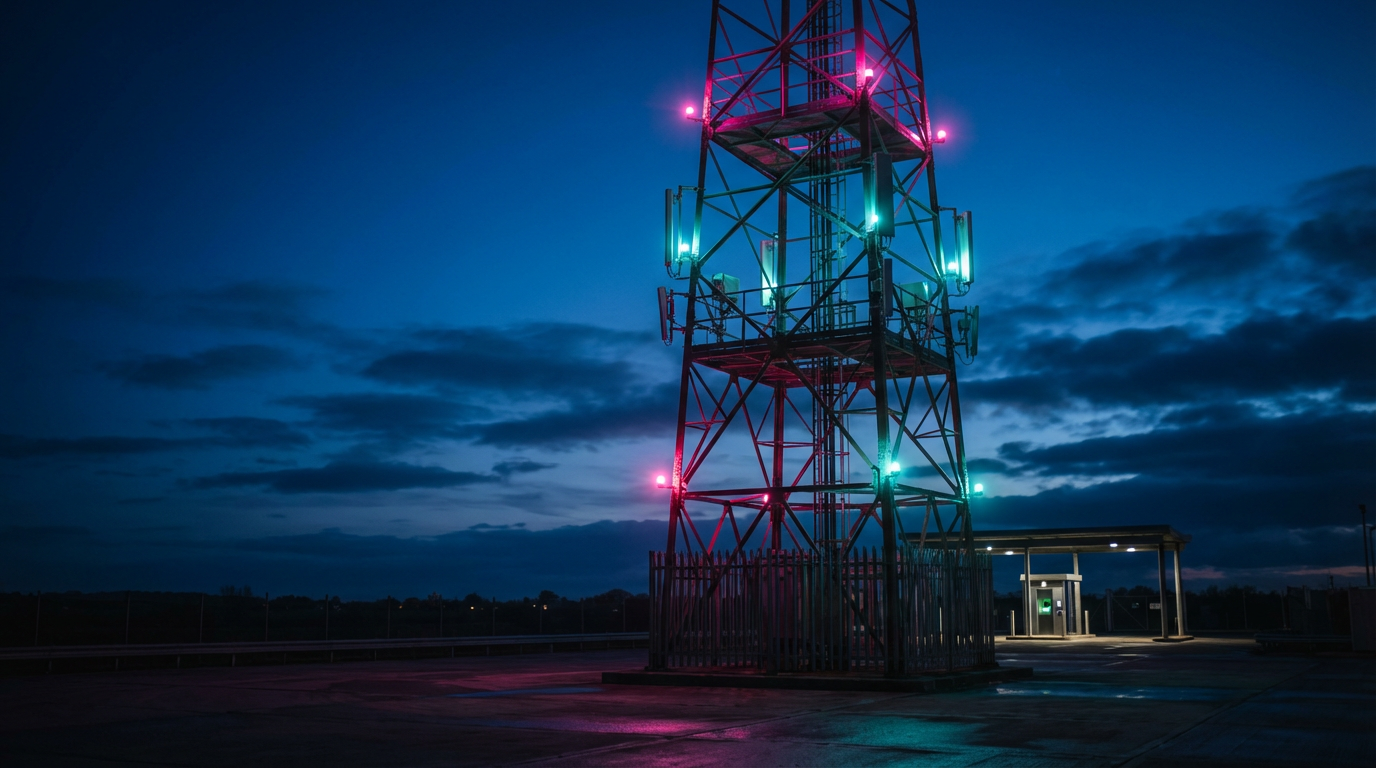
1. Why This Guide Exists
Firevault has created a world-first offline secure storage platform that physically controls connectivity to identity-locked and isolated hard drives. This is not cloud. This is not software. This is not an application. It is architecture that removes reachability as an attack vector.
This guide exists because the security industry has failed you. After $150 billion in annual cybersecurity spending globally, breaches are increasing, not decreasing. The 2024 Verizon DBIR shows 68% of breaches involve a human element, meaning your controls are only as reliable as imperfect humans operating them under pressure.
The uncomfortable truth: Detection-based security assumes you will find the threat before damage is done. In 2024, the average dwell time for attackers was 204 days (IBM). If your architecture depends on detection, you are betting against a 204-day head start.
This guide helps you answer the question boards are now asking after every major breach: "Why was this data reachable from the compromised system?"
2. Your Role and Your Data
As a Technical Architect or Security Engineer, you own the design decisions that determine blast radius. You translate security requirements into technical controls. When those controls fail, and they will, your architecture determines whether the breach is recoverable or existential.
The data you protect is the data attackers need:
- Cryptographic material: Private keys, certificates, HSM credentials, signing keys, compromise here is game over
- Infrastructure secrets: API keys, service accounts, database credentials, cloud access tokens
- Recovery assets: Backup encryption keys, disaster recovery credentials, golden images
- Identity infrastructure: Active Directory, Entra ID, LDAP, privileged access configurations
- Forensic evidence: Audit logs, SIEM data, compliance records, attackers delete these first
The architectural reality: This data lives in systems designed for availability. Your secrets manager is network-accessible. Your backup appliance has a management interface. Your SIEM accepts inbound connections. Every system designed for availability is designed for reachability. And reachability is the precondition for compromise.
Challenge your assumptions: Can you identify a single critical asset in your architecture that cannot be reached from a compromised endpoint with stolen credentials? If not, your architecture has a reachability problem, not a security tool problem.
3. The Threats You Cannot Detect in Time
Every threat you face exploits one architectural constant: connectivity.
Threat VectorDwell TimeWhy Detection Fails Advanced Persistent Threats204 days averageLiving-off-the-land techniques evade EDR; legitimate tools, legitimate credentials Ransomware4.5 days medianEncryption is the detection event, by then backups are already compromised Supply chain attacksMonths to yearsTrusted software, trusted channels, trusted signatures Insider threats85 days medianLegitimate access, legitimate behaviour until exfiltration Zero-day exploitationN/ANo signature exists; behavioural detection generates false positivesThe Kaseya lesson: In July 2021, REvil ransomware deployed through Kaseya VSA, the very tool used to manage and secure endpoints, compromised 1,500 organisations in hours. The attack used the management plane. Detection was irrelevant because the threat was the security tool.
The SolarWinds lesson: The SUNBURST backdoor remained undetected for 14 months inside 18,000 organisations including Fortune 500 companies and government agencies. The malware was signed with valid certificates and distributed through trusted update channels.
The core truth: If your security architecture depends on detecting threats before they reach critical assets, you are assuming your detection capability exceeds your adversary's evasion capability. The breach data says otherwise.
4. How Human Error Defeats Technical Controls
The 2024 Verizon DBIR attributes 68% of breaches to human error. But "human error" is too broad. The real question: which errors does your architecture tolerate, and which errors defeat it?
Errors your architecture cannot survive:
- Misconfigured cloud storage: S3 buckets, Azure Blobs, GCS exposed to internet, responsible for 31% of cloud breaches (IBM 2024)
- Over-permissioned service accounts: Service accounts with domain admin, keys that never rotate, secrets in environment variables
- Credential exposure: Secrets in Git repos, API keys in client-side code, passwords in documentation
- Failed patching: Median time to patch critical vulnerabilities is 60 days (Mandiant). Attackers weaponise in 15 days.
- Incident response errors: Wrong system isolated, wrong backup restored, containment that spreads the infection
The uncomfortable math: If your organisation has 10,000 configuration decisions per month, and 99.9% are correct, you are making 10 mistakes per month. Over a year, that is 120 opportunities for breach. How many does an attacker need?
Architectural implication: Offline secure storage does not eliminate human error. It assumes human error is inevitable and limits the blast radius by physically disconnecting critical assets. When the S3 bucket is misconfigured, the offline drives are not there to be reached.
5. The Architectural Assumptions That Will Fail
Modern security architecture is built on assumptions that attackers systematically invalidate:
Assumption: Zero trust eliminates implicit trust
Reality: Zero trust architectures still depend on identity providers, policy engines, and trust anchors that are themselves network-accessible. Compromise the identity provider, and zero trust becomes zero protection. The 2023 Okta breach demonstrated this, attackers accessed customer support systems and extracted authentication tokens.
Assumption: Segmentation limits blast radius
Reality: Logical segmentation requires correct configuration of thousands of firewall rules, security groups, and network policies. The 2013 Target breach began in HVAC systems and pivoted to payment networks through misconfigured segmentation. Physical isolation cannot be misconfigured.
Assumption: Immutable backups survive ransomware
Reality: "Immutable" storage systems still have management interfaces. Attackers increasingly target backup infrastructure first, 83% of ransomware attacks attempt backup compromise (Veeam 2024). If your immutable storage has an API, it can be reached.
Assumption: Defence in depth provides redundancy
Reality: Defence in depth means multiple controls, but if all controls are reachable from the same compromised position, depth becomes horizontal rather than vertical. Attackers who compromise an endpoint with valid credentials can often reach every layer.
The architectural challenge: Can you design a system where critical assets are unreachable even when all network-based controls fail, all credentials are stolen, and all detection is evaded? Offline secure storage is that design.
6. The Skill Gaps You Cannot Fill
The global cybersecurity workforce gap is 4 million professionals (ISC2 2024). But the problem is not just quantity, it is capability matching complexity.
Where skill gaps cause failures:
- Cloud security: Multi-cloud environments with different security models, IAM systems, and logging mechanisms
- Container/Kubernetes: Runtime security, network policies, secrets management in ephemeral environments
- Infrastructure as Code: Security misconfigurations propagated at scale through automation
- Incident response: Junior analysts on overnight shifts making containment decisions under pressure
- Threat hunting: Identifying adversary TTPs across petabytes of telemetry requires expertise most organisations lack
The on-call reality: At 3am on a Sunday, the person responding to an alert is probably not your most senior engineer. They are making decisions about containment, isolation, and recovery with incomplete information and degraded judgement. Your architecture must survive their worst decision.
Design principle: Offline secure storage removes skill-dependent decision making from critical asset protection. Physical disconnection is not a procedure that requires training, it is a state that requires deliberate action to change.
7. The Personal Stakes
When architecture fails, it becomes personal. The technical decisions you made years ago determine the outcome of today's breach investigation.
Questions you will face:
- "Why was the backup encryption key stored in a system accessible from the compromised network?"
- "Why did the ransomware reach the disaster recovery site through the replication link?"
- "Why were these credentials not rotated after the initial compromise?"
- "Why did the containment procedure spread the infection to the backup domain controller?"
- "Why did we have no recovery path that was independent of the compromised infrastructure?"
The Uber lesson: In 2022, an 18-year-old social-engineered an Uber contractor through MFA fatigue, then used hardcoded credentials in a PowerShell script to access AWS and Google Cloud. The attacker had access to virtually everything. The technical decisions that enabled this were made by architects who never imagined this specific attack.
Career reality: CISOs have an average tenure of 26 months. When the breach occurs, the architect who made the decisions may be gone, but the decisions persist. Your architecture is your legacy.
8. The Professional and Legal Implications
Post-breach, architectural decisions are scrutinised by regulators, insurers, and lawyers:
StakeholderTheir QuestionWhat They are Looking For Regulators (ICO, SEC, FTC)"Was security appropriate to the risk?"Evidence of reasonable technical measures, not just policies Cyber Insurers"Were controls as represented?"Proof that stated controls were actually implemented and operating Forensic Investigators"How did attackers traverse the environment?"Network diagrams, access logs, architectural decisions that enabled lateral movement Legal Counsel"What was the standard of care?"Industry benchmarks and whether your architecture met them Board of Directors"Why did our investments fail?"ROI on security spending and why it did not prevent thisThe legal standard is shifting: The SEC's 2023 cybersecurity disclosure rules require public companies to describe cybersecurity risk management processes. Material breaches must be disclosed within 4 days. Architectural decisions that enabled the breach become part of the legal record.
Defensive posture: Offline secure storage provides auditable, verifiable evidence that critical assets were physically unreachable. This is not a log entry that could be tampered with, it is a physical state that can be demonstrated.
9. What Offline Secure Storage Actually Changes
Offline secure storage is not another security layer. It is a different architectural paradigm that removes reachability as an attack vector:
CapabilityTraditional ArchitectureOffline Secure Storage Default stateConnected, accessible via networkPhysically disconnected, no network path exists Access modelCredential-based (can be stolen, shared, phished)Identity-locked to biometrics (cannot be transferred) Session durationPersistent or long-lived tokensTime-bound with automatic disconnection Lateral movementPossible once credentials obtainedImpossible, physical isolation eliminates network path Ransomware impactEncrypts all reachable data including backupsCannot encrypt disconnected drives Audit evidenceLog files that can be deleted or tamperedPhysical state verifiable independently of softwareTechnical implementation: Firevault uses physical relay switches to control connectivity to isolated hard drives. There is no software-controlled network path. Identity is verified through biometric binding, not passwords, not tokens, not certificates that can be stolen. Connectivity is time-bound and policy-governed with automatic disconnection.
10. Technical Evaluation Criteria
When evaluating offline secure storage, apply architectural rigour:
CriteriaVerification MethodRed Flags Physical disconnectionRequest physical demonstration of isolation mechanism"Air-gapped" systems with any network interface present Identity bindingVerify biometric binding cannot be delegated or sharedPassword or token-based access that could be stolen Session controlConfirm automatic disconnection is hardware-enforcedSoftware-controlled timeouts that could be disabled Management plane independenceVerify no always-on management interface existsCloud-connected management or remote administration capability Recovery independenceConfirm recovery does not depend on network infrastructureRecovery procedures requiring domain controllers or cloud services Audit immutabilityVerify audit logs are physically separated from managed dataLogs stored on the same systems being audited11. Where Firevault Fits in Your Architecture
Firevault is not a replacement for your security stack. It is the architectural foundation that ensures critical assets survive when your security stack fails:
Deployment patterns:
- Crown jewels protection: Encryption keys, signing certificates, recovery credentials stored offline
- Immutable backup tier: Golden images, configuration baselines, disaster recovery assets
- Evidence preservation: Forensic data, audit logs, compliance records physically isolated
- Succession and continuity: Board materials, legal documents, business-critical data with guaranteed survivability
Integration considerations:
- Firevault operates independently of your network, no firewall rules, no segmentation policies, no VPN access
- Identity is managed through Firevault's biometric binding, no integration with Active Directory or Entra ID required
- Audit data is exported for SIEM integration but stored independently
- No API, no SDK, no always-on management interface, this is intentional
12. Next Step: Validate the Architecture
The next step is not to evaluate another security product. It is to validate an architectural approach:
For Technical Architects and Security Engineers:
- Reachability Mapping: Identify every network path to your critical assets. How many assume all credentials are compromised?
- Proof of Disconnection: See physical isolation demonstrated. Not a diagram, the actual hardware.
- Attack Scenario Analysis: Walk through your last tabletop exercise. Would offline storage have changed the outcome?
- Recovery Path Verification: Test your disaster recovery with the assumption that your primary and secondary networks are both compromised. What survives?
Request:
- Architecture review with Firevault engineering team
- Threat scenario walkthrough mapped to your specific environment
- Proof-of-concept deployment for crown jewels protection
Share this article
Buyer's Guide: Technical Architects and Engineers
A comprehensive guide for Technical Architects and Security Engineers on implementing offline secure storage as a layer-zero security control. Learn how physical isolation protects against ransomware, exfiltration, and supply chain attacks.
Related Reading
You may also find these useful

Urgent Briefing and Advice: Protecting Personal Data for High-Profile Figures in the Public Eye
Practical steps for serving and former politicians, councillors, campaigners, journalists, executives, broadcasters and anyone in the public eye, covering email security, device hygiene, threat handling and offline secure storage.
500,000 Volunteers Breached Through Authorised Access: A Controlled Access Buyer's Guide
In April 2026, approved researchers exfiltrated the health records, genetic data, and medical histories of 500,000 UK Biobank volunteers through authorised access channels, then listed the data for sale on Alibaba. The breach was not caused by a hack. It was caused by a model that assumes licence agreements can prevent data theft. This guide covers why that model fails and what physical controls replace it.
Buyer's Guide: MDs and Board Executives
A board-level guide to cyber governance and personal accountability. Learn how offline secure storage provides the demonstrable, auditable protection that directors need to fulfil their fiduciary duties.
Buyer's Guide: Risk, Compliance and Governance
A comprehensive guide for Risk, Compliance, and Governance leaders on meeting regulatory requirements with offline secure storage. Learn how physical isolation provides demonstrable, auditable controls for GDPR, DORA, ISO 27001, and more.
Buyer's Guide: CFOs and Finance Directors
A financial leader's guide to understanding cyber risk as a balance sheet concern. Learn how offline secure storage provides quantifiable risk reduction, regulatory compliance, and board-level governance for data protection.

Buyer's Guide: IT Directors and Infrastructure
An infrastructure leader's guide to completing the 3-2-1-0 backup strategy with offline secure storage. Learn how physical air-gap protection ensures recovery capability that ransomware cannot defeat.