Conwy Council Breaches Show the Insider Threat Regulators Keep Underestimating
Three separate disciplinary outcomes in one department in twelve months. Mark Fermor on why the Conwy County Council data breaches are a structural warning to every UK local authority, not a one-off.

Why it matters
What this means for organisations holding critical data
Three separate disciplinary outcomes in one department in twelve months. Mark Fermor on why the Conwy County Council data breaches are a structural warning to every UK local authority, not a one-off.
Conwy County Council has confirmed that data protection failings inside its social services department led to one member of staff being dismissed, another resigning, and a third receiving a formal written warning. A separate IT security incident in the council's marketing and communications team in April 2026 resulted in a verbal warning and mandatory cyber refresher training.
The detail sits inside a Governance and Audit Committee report discussed this week at the council's Coed Pella headquarters in Colwyn Bay, and reported by the Daily Post. The dismissal followed a disciplinary hearing in July 2025 and an appeal in September 2025. The case is described as legally privileged because a police investigation is ongoing.
The facts
- One social services officer dismissed following a data breach, after a July 2025 disciplinary hearing and September 2025 appeal.
- A second social services staff member issued a formal written warning after a separate data breach.
- A third council officer, also in social services, resigned following a further breach in the same department.
- A separate IT security incident in marketing and communications in April 2026, resulting in a verbal warning and cyber refresher training.
- Head of Audit and Procurement Sioned Evans Parry told the committee that the information accessed related to an individual, not to the wider population, and that police enquiries continue.
- Councillor Paul Luckock of Abergele pressed for elected members to be briefed on what was accessed and what changes will follow.
Source: Daily Post, 1 July 2026, Conwy council data breach sees social services worker sacked.
Why this matters
Three separate disciplinary outcomes inside one department in twelve months is not a one-off. It is a pattern. Read alongside the fourth, unrelated marketing and communications incident, it is the kind of signal that regulators, insurers and residents should treat as evidence of a systemic control gap, not four isolated staff failures.
Legal privilege protects the council through the police process. It does not answer the question residents are actually asking, which is whose data was touched, and what stops it happening again.
The structural problem
Almost every headline control the public sector talks about assumes the threat is external. Multi-factor authentication, endpoint detection, phishing training, perimeter monitoring. All of them are aimed at keeping outsiders out.
Insider misuse of legitimately granted access defeats those controls by definition. If a caseworker can read a record, they can copy it. If an administrator can restore a backup, they can also alter or exfiltrate it. Detection is retrospective. The damage lands first, and the investigation lands months later, usually under legal privilege.
The Information Commissioner's Office has been clear for years that insider risk is one of the most consistent sources of local authority personal data breaches. The controls have not kept pace with that reality.
The Firevault position
Sensitive citizen records, and the recovery copies of the systems that hold them, must live on infrastructure that is physically severed from day-to-day operational access. That is the argument Firevault has made from day one.
Firebreak enforces that severance at the wire, not in policy. Offline Secure Storage holds the gold copy of records and configuration beyond the reach of any single staff account, credential compromise, or coerced access request. Insider risk is not eliminated. What changes is the blast radius. One role, in one session, can touch what that role is allowed to touch. It cannot quietly walk out with, or quietly overwrite, the archival copy of the entire dataset.
Cyber policy has spent a decade optimising for the outsider. The Conwy report is a reminder that the person with the badge, the login and the caseload is the harder problem, and that the answer to that problem is architectural, not procedural.
— Mark Fermor, Co-founder and CEO, Firevault
What UK councils should do this week
- Audit which roles can read, export, or bulk-query citizen records without a second approver. Treat any single-person export path over a threshold as a finding.
- Separate operational access from archival access at the network layer, not only in role-based access control. If the two paths share a wire, they share a compromise.
- Move recovery copies of sensitive datasets onto physically air-gapped storage, so that an insider with production access cannot silently modify the record of truth.
- Rehearse a disclosure drill that assumes the breach came from inside. Time how long it takes to answer the residents' question: whose data, and what stops it happening again.
Related from Firevault
How Firevault would handle this
A recovery copy an attacker cannot reach
Offline Secure Storage® keeps a clean copy of your data on hardware that is physically disconnected, so backup and recovery do not depend on systems an intruder can touch.
Related Reading
You may also find these useful

Revolut handed customer data to criminals for five months. Then came a $3 million ransom demand
Revolut handed sensitive customer data to criminals impersonating an Italian government agency for five months. Now a three million dollar ransom demand has gone public. Mark Fermor argues the real question is not how it happened, but why the process allowed it.
When data theft becomes personal: what we discussed at The Chelmsford Club
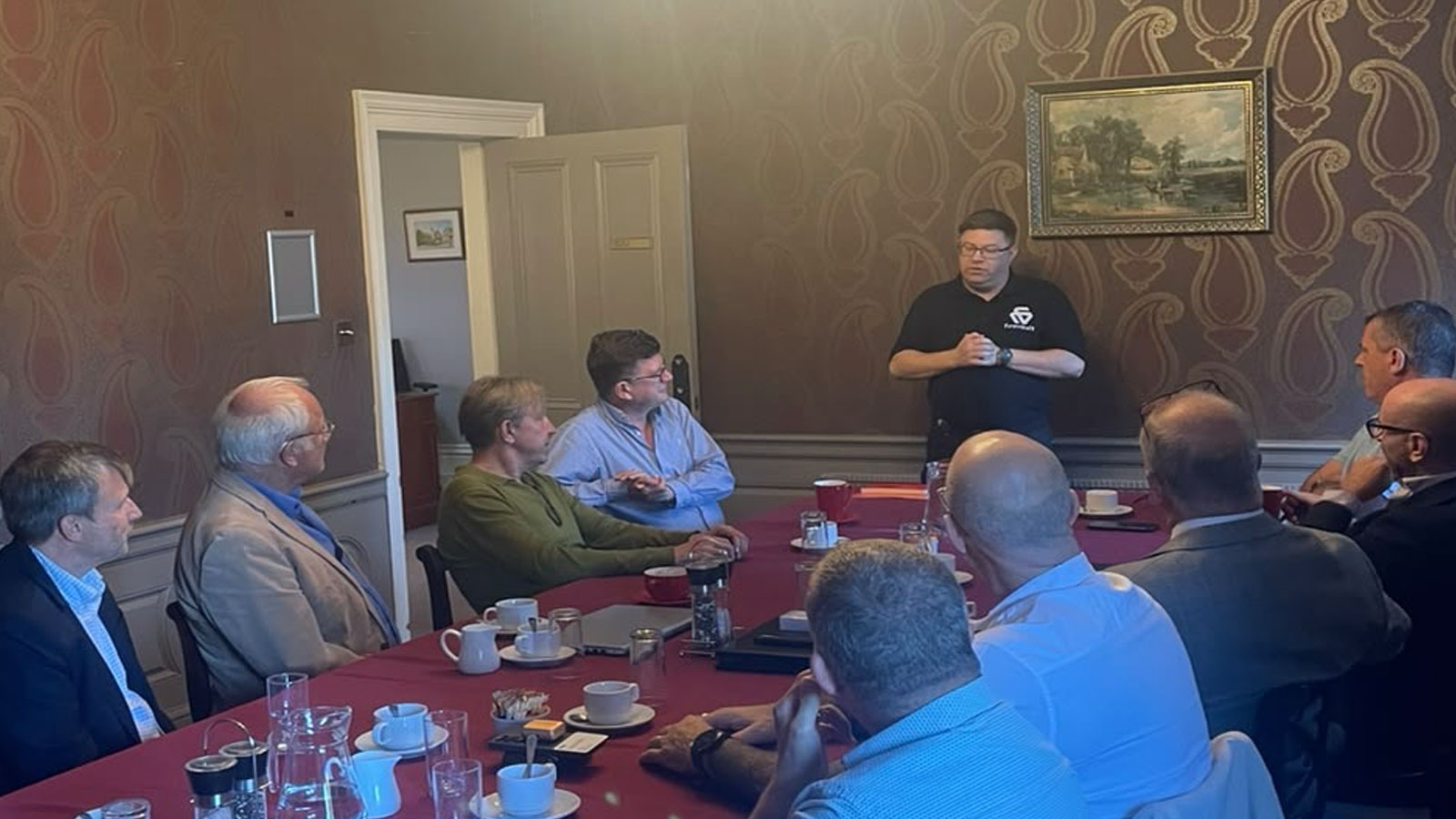
Mark Fermor joined the Inner Circle breakfast at The Chelmsford Club to talk about cyber attacks, data theft and what happens when information a business has been trusted to hold ends up in somebody else's hands. The real value of stolen data is not what somebody will pay for it. It is what that information allows them to do next, and the consequence lands personally, professionally and commercially.
Nissan / PeopleSoft Breach: When HR Is Also Your Financial Data Repository
Nissan Americas has confirmed employee SSNs, banking and tax data were exposed through the Oracle PeopleSoft zero-day (CVE-2026-35273) campaign linked to ShinyHunters. Mark Fermor on why HR systems keep becoming citizen-scale breaches.

Tata / Apple Leak Shows Why Supply-Chain Data Belongs Off the Wire
World Leaks has posted iPhone 18 Pro supplier maps and drop-test photos taken from Apple's Indian manufacturer Tata Electronics. Mark Fermor on why the answer is architectural, not contractual.

FortiBleed Proves the IP-Connected Perimeter is Indefensible
SOCRadar has now tied the FortiBleed credential-harvesting operation directly to INC and Lynx ransomware deployments. Mark Fermor on why physical severance is the only durable answer.

Dyfed-Powys Police confirms cyber attack as staff information may have been compromised
Dyfed-Powys Police has confirmed that a cyber attack identified on 14 September disrupted non-emergency systems and may have exposed staff information. The force says it has found no evidence that public data was accessed.