Tata / Apple Leak Shows Why Supply-Chain Data Belongs Off the Wire
World Leaks has posted iPhone 18 Pro supplier maps and drop-test photos taken from Apple's Indian manufacturer Tata Electronics. Mark Fermor on why the answer is architectural, not contractual.


Why it matters
What this means for organisations holding critical data
World Leaks has posted iPhone 18 Pro supplier maps and drop-test photos taken from Apple's Indian manufacturer Tata Electronics. Mark Fermor on why the answer is architectural, not contractual.
Reuters has reported that files posted to the dark web by the World Leaks group, taken from Apple's Indian contract manufacturer Tata Electronics, include at least six documents mapping hundreds of iPhone 18 Pro components to their specific suppliers, along with dated drop-test photographs of unreleased handsets carrying Apple "confidential" watermarks.
Earlier tranches of the same leak, in excess of 200,000 files, contained older iPhone design papers, Tesla documents, and material relating to TSMC and Qualcomm. Tata has restricted internal access to sensitive systems and hired a global consultant to run a forensic audit. India has now opened its own investigation. World Leaks has previously claimed responsibility for the Nike breach.
The facts
- At least six leaked files map hundreds of iPhone 18 Pro components to the specific companies that supply them, including chips on the main circuit board and parts of the battery and cameras.
- Drop-test photographs of iPhone 18 Pro models, dated early 2026, carry Apple confidential watermarks and internal code-names.
- Prior tranches in the same leak, more than 200,000 files, included older iPhone design papers and Tesla documents, plus material relating to TSMC and Qualcomm.
- India is on track to manufacture around 26 per cent of the world's iPhones in 2026, up from 6 per cent four years ago, per Counterpoint.
- Tata has restricted internal access, engaged a forensic consultant, and is working with Apple on longer-term measures.
Source: Reuters, 29 June 2026, Apple iPhone 18 Pro supplier list, parts, photos exposed in Tata data leak.
Why this matters
Apple's supplier map is one of the most carefully protected commercial datasets in consumer electronics. Apple deliberately does not publish which supplier makes which part; the leaked documents do exactly that, for a product that has not launched.
The exposure is not confined to a single unreleased device. It hands rivals, counterfeiters and Apple's own vendors a live view of who makes what, and where Apple sits on a single source rather than a dual. That is bargaining leverage disclosed. It is also a shopping list for the next attacker looking for the softest link in the chain.
The blast radius did not sit at Apple. It sat at Apple's supplier. That is the defining feature of modern breaches: the data an organisation must protect leaves its perimeter the moment it engages a manufacturing partner. From that point, the security posture that matters is the partner's, not the prime's.
The structural problem
Every mitigation named in the coverage arrives after the fact. Restrict internal access. Hire a forensic auditor. Tighten controls. All useful. None of them recover a copy that has already been staged and exfiltrated.
Contract manufacturers, by design, need working copies of design files, bills of materials, engineering samples and test imagery. If those working copies live on general-purpose IT infrastructure, reachable from the same network as email, file share and vendor VPN, then a single credential, a single vulnerable appliance, or a single ransomware payload is enough to lift them wholesale.
Non-disclosure agreements and audit clauses do not stop exfiltration. They allocate blame after it.
The Firevault position
Sensitive intellectual property shared with a manufacturing partner should be held on infrastructure that is physically severed from that partner's operational IT estate.
Working copies belong on managed, time-boxed access on the production floor. The master and archival copies belong on infrastructure that cannot be reached by a compromised endpoint, a stolen credential, or a ransomware operator already inside the partner's network. Firebreak enforces that severance at the wire, not in policy. Offline Secure Storage holds the gold copy of the supply-chain dataset beyond the reach of any single user or system.
This is not a policy question. It is an architectural one. If the archive is on the network, the archive is on the market.
— Mark Fermor, Co-founder and CEO, Firevault
What primes and their suppliers should do this week
- Inventory every third party holding pre-release design data, bills of materials, or supplier maps. Treat supplier lists themselves as sensitive intellectual property, not metadata.
- Require partners to hold master copies on physically air-gapped storage, not on cloud tiers marketed as immutable. Write the requirement into the contract and audit against it.
- Move drop-test imagery, engineering samples and supplier maps behind a physical severance boundary at the manufacturer, so production access does not equal archival access.
- Rehearse a joint disclosure drill that assumes the partner, not the prime, has been breached. Time how long it takes to answer the question every customer will ask: what leaked, and what stops it happening again.
Related from Firevault
How Firevault would handle this
Controls an auditor can physically verify
Firevault gives you physical separation, named custody and evidenced access, so compliance claims about isolation and control are things you can show, not just assert.
Related Reading
You may also find these useful

Revolut handed customer data to criminals for five months. Then came a $3 million ransom demand
Revolut handed sensitive customer data to criminals impersonating an Italian government agency for five months. Now a three million dollar ransom demand has gone public. Mark Fermor argues the real question is not how it happened, but why the process allowed it.
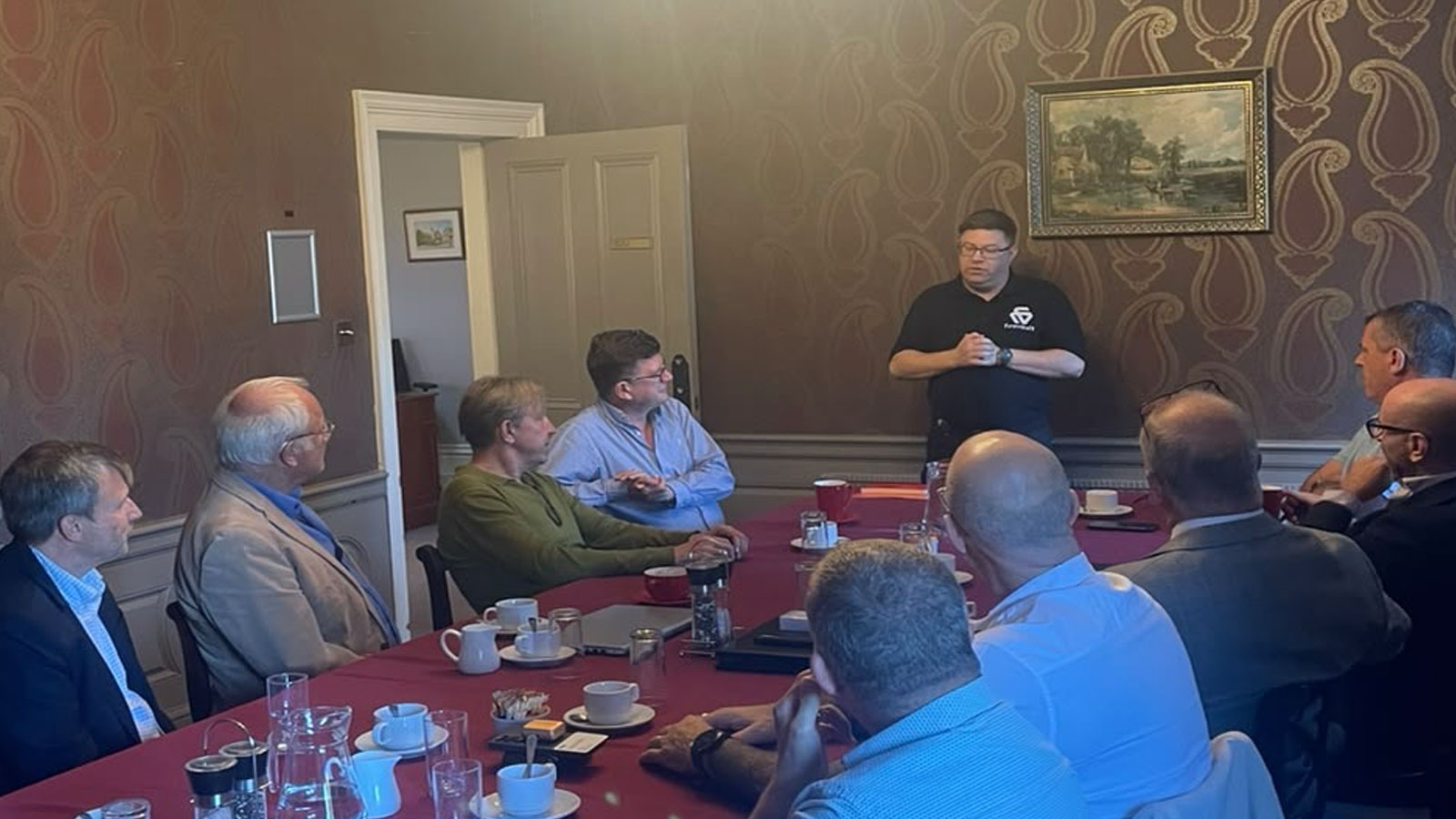
When data theft becomes personal: what we discussed at The Chelmsford Club
Mark Fermor joined the Inner Circle breakfast at The Chelmsford Club to talk about cyber attacks, data theft and what happens when information a business has been trusted to hold ends up in somebody else's hands. The real value of stolen data is not what somebody will pay for it. It is what that information allows them to do next, and the consequence lands personally, professionally and commercially.
Nissan / PeopleSoft Breach: When HR Is Also Your Financial Data Repository
Nissan Americas has confirmed employee SSNs, banking and tax data were exposed through the Oracle PeopleSoft zero-day (CVE-2026-35273) campaign linked to ShinyHunters. Mark Fermor on why HR systems keep becoming citizen-scale breaches.
Conwy Council Breaches Show the Insider Threat Regulators Keep Underestimating
Three separate disciplinary outcomes in one department in twelve months. Mark Fermor on why the Conwy County Council data breaches are a structural warning to every UK local authority, not a one-off.
FortiBleed Proves the IP-Connected Perimeter is Indefensible
SOCRadar has now tied the FortiBleed credential-harvesting operation directly to INC and Lynx ransomware deployments. Mark Fermor on why physical severance is the only durable answer.

Dyfed-Powys Police confirms cyber attack as staff information may have been compromised
Dyfed-Powys Police has confirmed that a cyber attack identified on 14 September disrupted non-emergency systems and may have exposed staff information. The force says it has found no evidence that public data was accessed.