FortiBleed Proves the IP-Connected Perimeter is Indefensible
SOCRadar has now tied the FortiBleed credential-harvesting operation directly to INC and Lynx ransomware deployments. Mark Fermor on why physical severance is the only durable answer.


Why it matters
What this means for organisations holding critical data
SOCRadar has now tied the FortiBleed credential-harvesting operation directly to INC and Lynx ransomware deployments. Mark Fermor on why physical severance is the only durable answer.
The facts
SOCRadar has attributed the FortiBleed campaign to the INC and Lynx ransomware operations, closing the loop between mass credential theft and encryption events for the first time. An operator tied to FortiBleed infrastructure was observed logged into the negotiation panels of both groups, with named INC Ransom victims overlapping with data harvested by the campaign.
The scale of the operation is the part that should give every board pause:
- 430,000 FortiGate firewalls scanned globally
- Over 110 million credentials harvested
- ~12,000 Fortinet devices seeded with a custom Golang packet sniffer
- 11,250 portals actively probed across more than 150 countries
- 409 confirmed admin-level compromises
- 354 full attack chains completed
- 12 ransomware deployments already attributed to this access, encrypting hundreds of endpoints
- ~29,000 IP addresses and 37 domains already flagged as a Citrix target list, suggesting the same automation is being repurposed
SOCRadar also reports the actor is believed to hold at least one zero-day in Nextcloud. The operation is assessed as a Russian-speaking initial access broker with a division of labour across roughly 20 people. Targeting has skewed toward manufacturing, technology and logistics in Latin America and the Asia Pacific region.
Why this matters
Two things changed this week.
First, mass credential harvesting on internet-facing appliances is no longer a theoretical precursor to ransomware. It is the pipeline. Stolen FortiGate credentials are being sold, verified and used to detonate INC and Lynx payloads inside real organisations. The 21-day average dwell time still holds. Attackers had weeks inside these networks before anyone noticed.
Second, the appliance itself is the compromise. The Golang sniffer runs on the firewall. The credential store is the firewall. The pivot point into the corporate network is the firewall. Every mitigation the industry is offering in response, rotate credentials, enforce MFA, monitor authentication logs, is a software control layered on top of a device that has already been turned against its owner.
The structural problem
You cannot patch your way out of a category where the perimeter device is simultaneously the credential store, the sniffer host and the lateral movement platform. Rotating credentials on a compromised appliance simply hands the attacker the new credentials on the next TLS handshake. MFA is bypassed by session theft from the same sniffer. Log monitoring assumes the logs themselves are trustworthy, which they are not once the device is owned.
This is not a criticism of Fortinet. Any IP-reachable appliance holding privileged credentials sits in the same category. The FortiBleed operators have already demonstrated the workflow generalises. Citrix is next on their list. Everything with a management plane facing the internet is a candidate.
The Firevault position
Mark Fermor, founder of Firevault:
"FortiBleed is not an incident. It is a category. When the device defending the perimeter can be silently turned into the tool that empties it, no amount of software hardening on that device changes the outcome. Recovery infrastructure has to be beyond network reach, not merely marked immutable. Segmentation has to be physical, not logical. Firebreak severs the paths ransomware depends on. Archive holds control-plane baselines with no live path to production. Neither can be reached by a compromised FortiGate, a stolen credential, or a Nextcloud zero-day, because the connection required to reach them does not exist."
What to do this week
- Treat credentials on every internet-facing management plane as already compromised, whether it is Fortinet, Citrix, or anything else with a browser-accessible admin portal.
- Audit whether your backup and recovery infrastructure is reachable from the same network segment as those appliances. If it is, ransomware can reach it too.
- Move critical recovery assets onto physically separate paths that cannot be traversed by privilege escalation alone.
- Rehearse a severance-and-restore drill on the assumption that your perimeter appliance is the initial foothold.
Sources and further reading
- The Hacker News, 2 July 2026: FortiBleed Credential Theft Linked to INC and Lynx Ransomware Operations
- Firevault: Contain Ransomware Through Physical Path Severance
- Firevault: FV-Firebreak, Emergency Network Severance
- Firevault: Physical Air Gap Ransomware Protection
How Firevault would handle this
A recovery copy an attacker cannot reach
Offline Secure Storage® keeps a clean copy of your data on hardware that is physically disconnected, so backup and recovery do not depend on systems an intruder can touch.
Related Reading
You may also find these useful

Revolut handed customer data to criminals for five months. Then came a $3 million ransom demand
Revolut handed sensitive customer data to criminals impersonating an Italian government agency for five months. Now a three million dollar ransom demand has gone public. Mark Fermor argues the real question is not how it happened, but why the process allowed it.
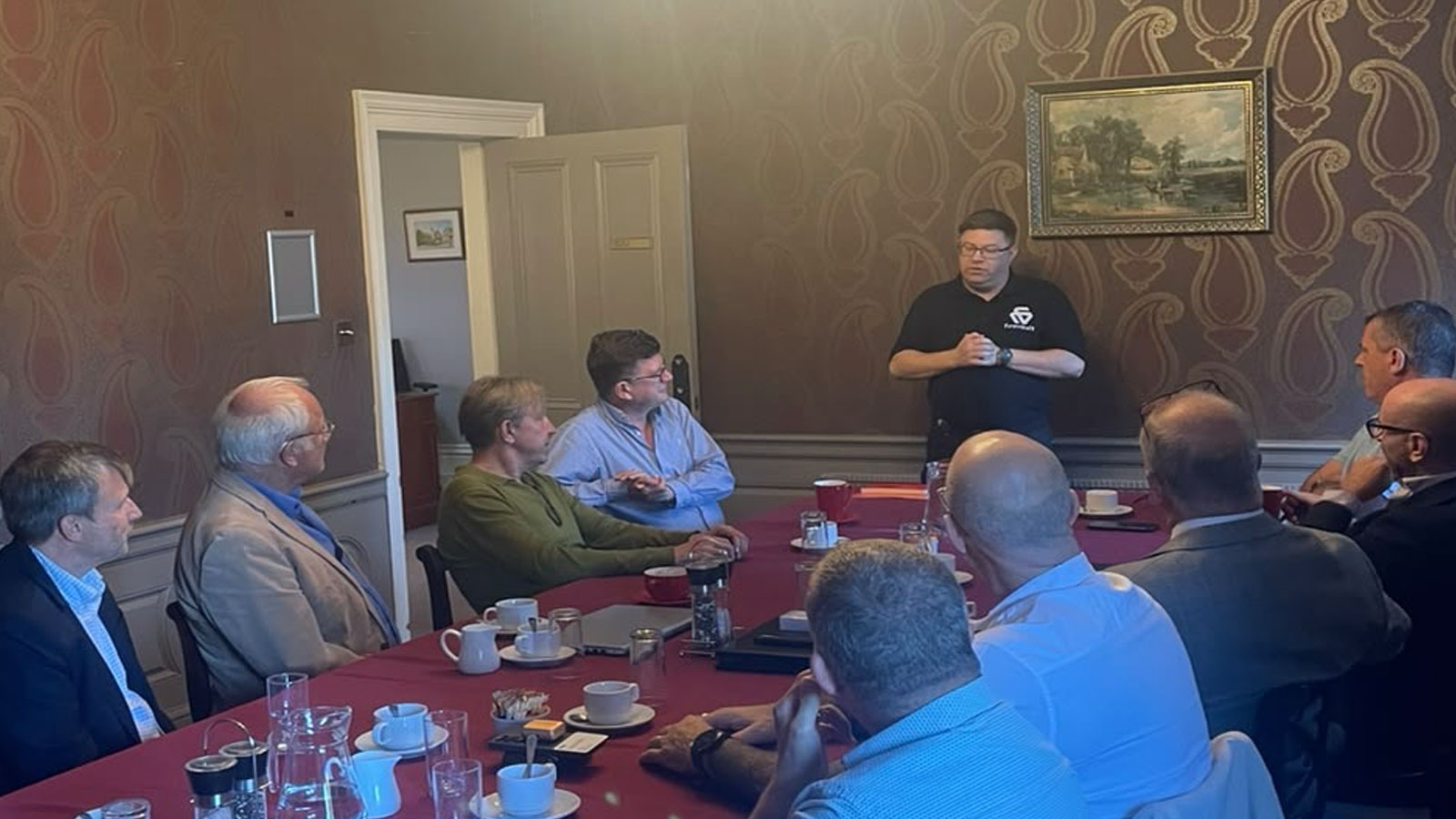
When data theft becomes personal: what we discussed at The Chelmsford Club
Mark Fermor joined the Inner Circle breakfast at The Chelmsford Club to talk about cyber attacks, data theft and what happens when information a business has been trusted to hold ends up in somebody else's hands. The real value of stolen data is not what somebody will pay for it. It is what that information allows them to do next, and the consequence lands personally, professionally and commercially.
Nissan / PeopleSoft Breach: When HR Is Also Your Financial Data Repository
Nissan Americas has confirmed employee SSNs, banking and tax data were exposed through the Oracle PeopleSoft zero-day (CVE-2026-35273) campaign linked to ShinyHunters. Mark Fermor on why HR systems keep becoming citizen-scale breaches.
Tata / Apple Leak Shows Why Supply-Chain Data Belongs Off the Wire
World Leaks has posted iPhone 18 Pro supplier maps and drop-test photos taken from Apple's Indian manufacturer Tata Electronics. Mark Fermor on why the answer is architectural, not contractual.
Conwy Council Breaches Show the Insider Threat Regulators Keep Underestimating
Three separate disciplinary outcomes in one department in twelve months. Mark Fermor on why the Conwy County Council data breaches are a structural warning to every UK local authority, not a one-off.
Dyfed-Powys Police confirms cyber attack as staff information may have been compromised
Dyfed-Powys Police has confirmed that a cyber attack identified on 14 September disrupted non-emergency systems and may have exposed staff information. The force says it has found no evidence that public data was accessed.