
Architecture
Physical Layer Security Architecture
Firewalls, endpoint detection, identity management, and immutable backups are all software layers. Every software layer depends on the integrity of the layer beneath it. The physical layer is the foundation that no software attack can compromise.

Mark FermorCTO, CMO & Founder, Firevault
Published 19 February 2026 · 4 min read
Security Is Built in Layers
Defence in depth is the foundational principle of modern security architecture. Organisations deploy multiple layers of controls: network security, endpoint protection, identity management, application security, and data protection. Each layer reduces the probability of a successful attack.
But every layer in a typical security architecture shares a common characteristic: it is software. Firewalls run on firmware. Endpoint detection runs on operating systems. Identity management runs on cloud platforms. Even "immutable" backup runs on storage software. Each software layer depends on the integrity of the software beneath it.
The Software Ceiling
Software-based security has a ceiling. No matter how many layers of software you deploy, every layer is vulnerable to:
- Zero-day vulnerabilities: Undiscovered flaws in any layer can be exploited before patches exist
- Configuration errors: A single misconfiguration in any layer can create an exploitable gap
- Credential compromise: Administrative credentials for any layer can be phished, purchased, or brute-forced
- Supply chain attacks: Compromised updates to any layer can bypass all controls in that layer
- Insider threats: Personnel with administrative access can bypass controls in any layer they manage
This is not a criticism of software security. These layers are essential. But they represent probability reduction, not elimination. There is always a non-zero probability that a sufficiently sophisticated attacker can traverse all software layers.
The Physical Layer: Where Probability Becomes Zero
The physical layer operates on a different principle entirely. Rather than reducing the probability of successful attack, it eliminates the possibility of remote attack by removing the attack surface.
Data stored in physically disconnected hardware has no IP address, no network interface, no API endpoint, and no remote management console. There is no software to exploit, no credentials to compromise, and no configuration to misconfigure. The only attack vector is physical access, which is governed through identity verification and access controls that create accountability.
Where the Physical Layer Fits
The physical layer does not replace software security layers. It provides the foundation beneath them:
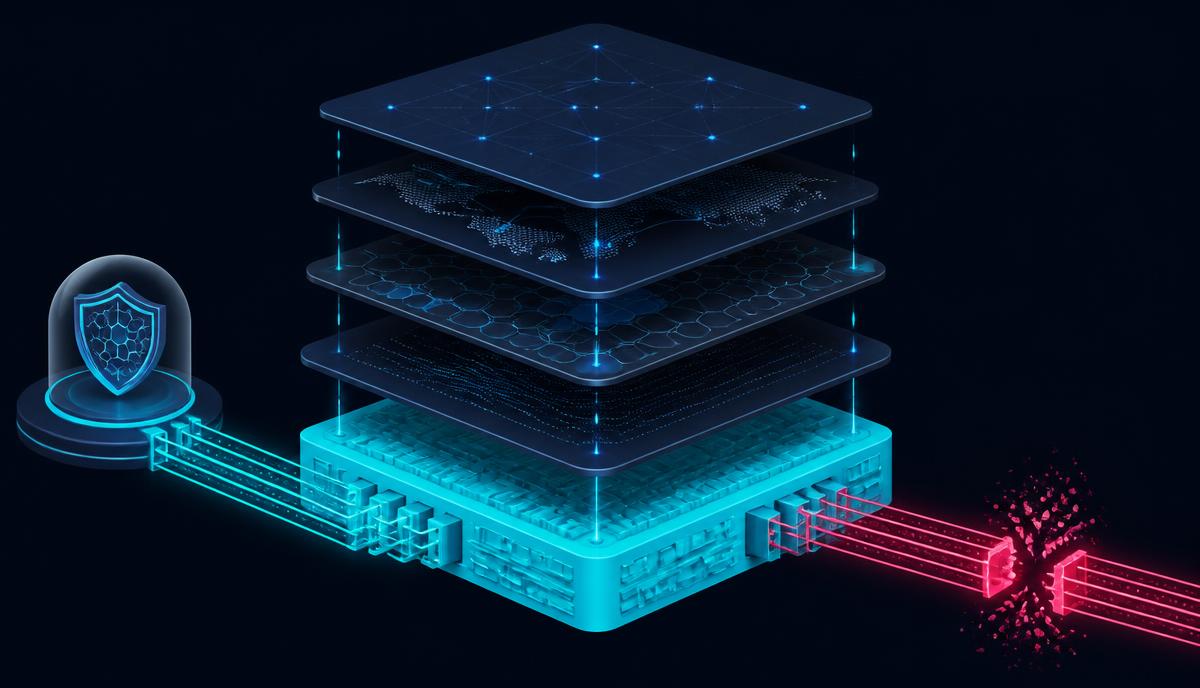
The Security Architecture Stack
- Layer 5 (Application): Application-level security controls, input validation, authentication
- Layer 4 (Identity): Identity management, multi-factor authentication, least privilege
- Layer 3 (Network): Firewalls, segmentation, intrusion detection
- Layer 2 (Endpoint): Endpoint detection and response, device management
- Layer 1 (Physical): Offline Secure Storage® for recovery credentials, certificates, and critical assets
When Layers 2 through 5 are all compromised simultaneously (as happens in sophisticated ransomware attacks), Layer 1 remains intact because it operates on different physics. This is the foundation from which all other layers can be rebuilt.
What Lives at the Physical Layer
The physical layer governs the assets that every other layer depends on:
- The credentials that configure Layer 3: Firewall admin passwords and network device credentials
- The certificates that underpin Layer 4: Root CA keys and identity system configuration
- The procedures that rebuild Layers 2 through 5: System rebuild documentation and configuration baselines
- The evidence that validates all layers: Audit logs, compliance documentation, and governance records
The Architecture of Certainty
Software layers provide confidence. The physical layer provides certainty. Confidence says "we believe our controls will hold." Certainty says "regardless of what happens to our software controls, we can recover."
This distinction matters most in board rooms, regulatory conversations, and insurance negotiations. Confidence requires explanation. Certainty requires only demonstration.
Conclusion
Every security architecture that consists exclusively of software layers has a ceiling. The physical layer breaks through that ceiling by providing a foundation that no software attack can reach. For the assets that matter most, the credentials and procedures that enable recovery from total compromise, the physical layer is not optional. It is the foundation that makes every other layer rebuildable.
Where Firevault fits
A recovery copy an attacker cannot reach
Offline Secure Storage® keeps a clean copy of your data on hardware that is physically disconnected, so backup and recovery do not depend on systems an intruder can touch.
- 1Hardware Your copy sits on dedicated encrypted hardware
- 2Disconnect Offline by default, connected only when you say so
- 3Recovery A known-clean copy to rebuild from, on your timetable
- 4Location Held in a secure Firevault Bunker
Related Reading
You may also find these useful

GhostAction returns: about 1,900 GitHub accounts used to target more than 30,000 repositories
A renewed GhostAction wave pushed malicious GitHub Actions workflows to more than 30,000 repositories and tried to extract 3,174 secrets. Old, unrotated credentials did much of the work.

EY data breach: client tax records exposed through a support platform
Client tax documents held in EY support tickets were downloaded by an unauthorised third party. Later reports link the exposure to Goldman Sachs, Man Group and Tishman Speyer.

ASOS data breach: stolen customer profiles and a hijacked app notification
ASOS confirms customer-data exposure after attackers hijacked its app notifications. What happened, what was taken and why a stolen login can put more than contact details at risk.


Put this guide into practice
Ready to apply what you have learned? Explore how Firevault delivers the offline protection covered in this guide.
From £360 a month including VAT. 36-month commitment. First payment at checkout.