Data Integrity Attacks and Air Gap Defence
Data integrity attacks, a stealthier cousin to traditional ransomware, are on the rise, posing a significant threat to organisational trust and operational continuity. This article explores the growing danger of data manipulation and highlights how physically air-gapped storage offers an uncompromised defence.

Why it matters
What this means for organisations holding critical data
Data integrity attacks, a stealthier cousin to traditional ransomware, are on the rise, posing a significant threat to organisational trust and operational continuity. This article explores the growing danger of data manipulation and highlights how physically air-gapped storage offers an uncompromised defence.
The Evolving Landscape of Cyber Threats
The cybersecurity landscape is in a state of perpetual evolution, with threat actors consistently refining their methodologies to circumvent conventional defences. While ransomware has dominated headlines for its disruptive and financially motivated nature, a more insidious threat is gaining traction: data integrity attacks. These attacks do not merely encrypt or exfiltrate data; they subtly alter, corrupt, or destroy it, often without immediate detection. The ramifications extend beyond financial loss, impacting an organisation's reputation, regulatory compliance, and fundamental operational efficacy.
The Insidious Nature of Data Integrity Attacks
Data integrity attacks are designed for stealth and long-term impact. Unlike a ransomware event, which announces its presence with a demand, an integrity breach can remain dormant for extended periods, silently corrupting critical information. This makes detection and recovery profoundly challenging. The Verizon 2023 Data Breach Investigations Report, for example, noted that while financially motivated breaches continue to dominate, a growing proportion involve system intrusion where data manipulation is a primary objective, rather than just exfiltration. Furthermore, a study by IBM Security X-Force found that the average time to identify and contain a data breach was 277 days in 2022, a figure that is likely to be even higher for integrity-focused attacks due to their covert nature.
Consider the implications for sectors reliant on precise data: financial institutions where transaction records could be subtly altered, healthcare providers where patient histories could be falsified, or manufacturing companies where product specifications could be compromised. The trust placed in digital records, the bedrock of modern business, is fundamentally undermined. The cost of such breaches is not just the direct financial impact, but the long-term erosion of customer confidence and potential regulatory penalties. The UK's Information Commissioner's Office (ICO) has demonstrated a willingness to impose substantial fines for data breaches, and a breach of data integrity could easily fall under these provisions, with the added complexity of proving the extent of the damage and the source.
The Limitations of Conventional Backups
Traditional backup strategies, while essential, often fall short in defending against sophisticated data integrity attacks. Many backup systems are connected to the primary network, making them vulnerable to the same threat vectors. If an attacker gains sufficient access to modify live data, they may also be able to compromise network-attached backups, propagating the corruption. Cloud-based backups, while offering geographical dispersion, are still logically connected and can be susceptible to advanced persistent threats that establish long-term access. This creates a scenario where an organisation might restore from a backup, only to find that the restored data is already compromised, or that the malware lies dormant within the backup, ready to reactivate.
The National Cyber Security Centre (NCSC) consistently advises a 'defence in depth' approach, and while robust network security and endpoint detection are crucial, they are not infallible. The human element, phishing, and zero-day exploits remain persistent vulnerabilities. Organisations need a failsafe, an ultimate line of defence that is immune to logical compromise.
The Unassailable Defence: Physical Air Gap Storage
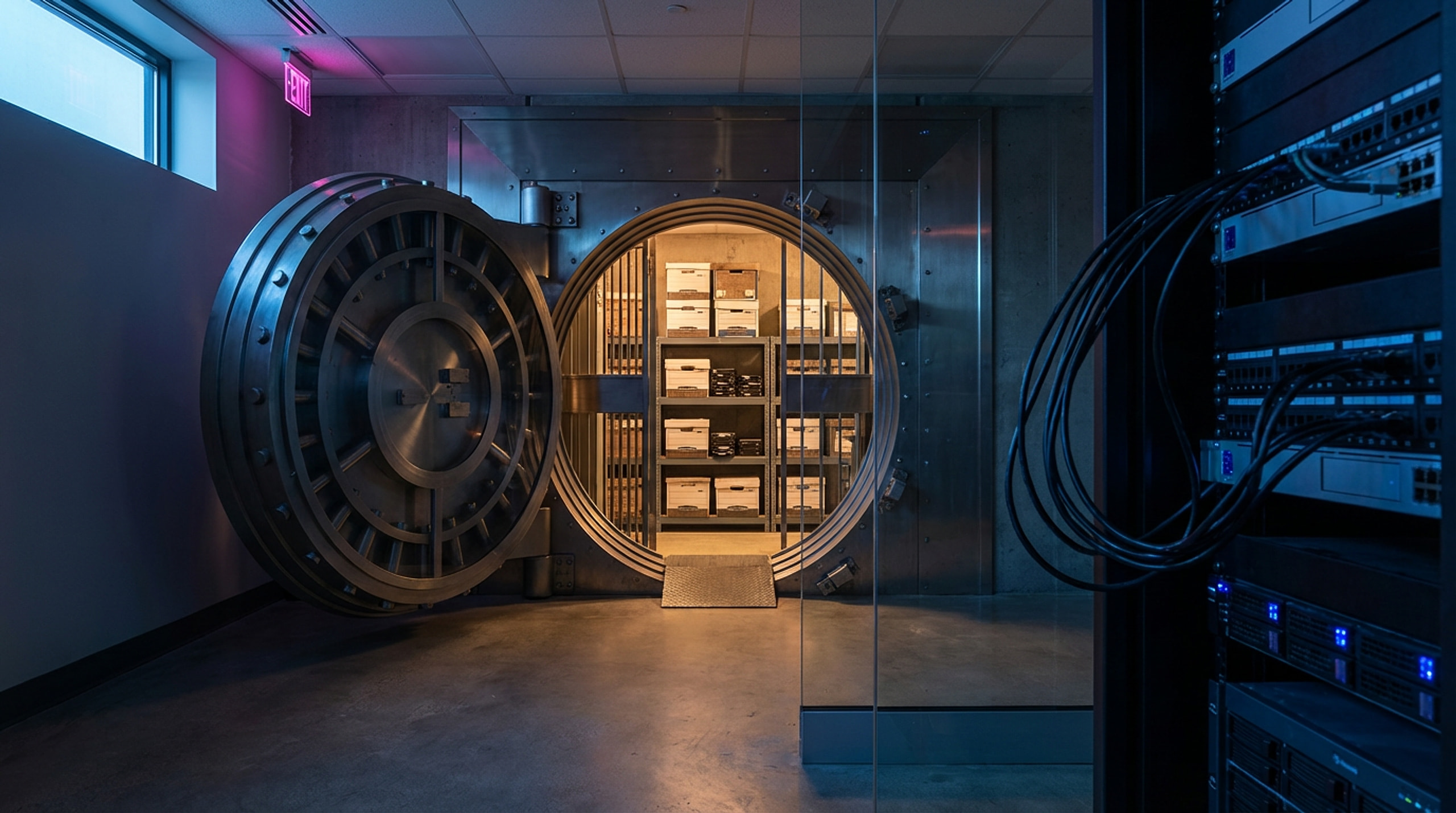
This is precisely where the unparalleled value proposition of physically air-gapped storage, such as that offered by Firevault, becomes critically apparent. An air gap, by definition, is a network security measure implemented on one or more computers to ensure that a secure computer network is physically isolated from unsecured networks, such as the public internet or an organisation's internal network. For data storage, this means that copies of critical data are stored on media that are physically disconnected from any network connection.
When data is transferred to a physically air-gapped system, it is moved to a medium that has no electronic connection to the outside world. This renders it impervious to network-borne attacks, including ransomware, malware designed for data manipulation, and advanced persistent threats. Even if an attacker completely compromises an organisation's live network and all network-attached backups, the data within the physical air gap remains untouched, untainted, and fully intact.
The process often involves writing data to physical media, such as magnetic tapes or specialised hard drives, which are then stored in a secure, off-site facility. Retrieval involves physically connecting to the media, verifying its integrity, and then restoring the clean data. This manual intervention, far from being a drawback, is the fundamental strength of the system, providing an ironclad guarantee of isolation.
Practical Insights for Businesses
Organisations must shift their mindset from simply 'backing up' data to 'preserving data integrity' in the face of sophisticated threats. Here are practical insights:
- Holistic Risk Assessment: Conduct thorough assessments that specifically consider data integrity attacks, identifying critical data assets and their potential vulnerabilities.
- Layered Security Architecture: Implement a robust 'defence in depth' strategy comprising strong network segmentation, endpoint protection, and incident response plans.
- Regular Integrity Checks: Beyond basic backup verification, implement advanced data integrity checks on production systems and network-attached backups to detect subtle alterations.
- Embrace the Physical Air Gap: Integrate a physically air-gapped storage solution into your disaster recovery and business continuity strategy. This should be considered the ultimate 'clean room' for your most vital data.
- Test and Validate: Regularly test the recovery process from the air-gapped solution, ensuring that clean data can be restored efficiently and effectively when needed.
In an era where digital trust is paramount, and the sophistication of cyber adversaries continues to grow, relying solely on logically connected defences is a gamble no responsible organisation should take. Physical air-gapped storage provides a non-negotiable safeguard, ensuring that even in the most catastrophic cyber event, the integrity of an organisation's most valuable asset – its data – remains uncompromised. It is not merely a backup strategy; it is a fundamental pillar of cyber resilience in the modern threat landscape.
How Firevault helps
- Offline Secure Storage keeps gold-copy data physically disconnected from the network, so a ransomware or exfiltration event cannot reach it.
- Control gives boards and operators a single view of what is online, what is isolated, and what is recoverable across the estate.
Talk to Firevault about Disconnect to Protect® for your organisation.
How Firevault would handle this
A recovery copy an attacker cannot reach
Offline Secure Storage® keeps a clean copy of your data on hardware that is physically disconnected, so backup and recovery do not depend on systems an intruder can touch.
Related Reading
You may also find these useful

Morgan Stanley email error exposed an internal list of more than 100 potential deals
A senior banker accidentally sent clients an internal deal-pipeline attachment. The incident was not a cyberattack, but it shows how one ordinary email can turn confidential working information into a market-integrity and client-trust problem.

When Access Fails: Continuity Needs Offline Secure Storage
Fire and grid failure are only one of six ways organisations lose access to their own records. A practical case for holding critical material offline, whatever the cause.

Offline Is Not Enough: What the $114 Million Cold Wallet Sweep Teaches Us About Key Generation
An attacker emptied 1,196 bitcoin wallets in 41 minutes without ever touching a single device. The wallets were air gapped. The keys were not truly random. Here is what that means for anyone who relies on offline storage.

The Minnesota Water Attacks: Why Connectivity Is Becoming Critical Infrastructure's Biggest Risk
More than 30 US water and wastewater utilities were targeted in a coordinated cyber attack on operational technology. The lesson for critical infrastructure is that unnecessary connectivity is now the risk itself.

Rogue AI Agents: A Firevault Commentary on the Hugging Face Incident
Firevault commentary on the first fully autonomous AI hack. Our take on what boards should do, informed by Joe Tidy's BBC reporting.
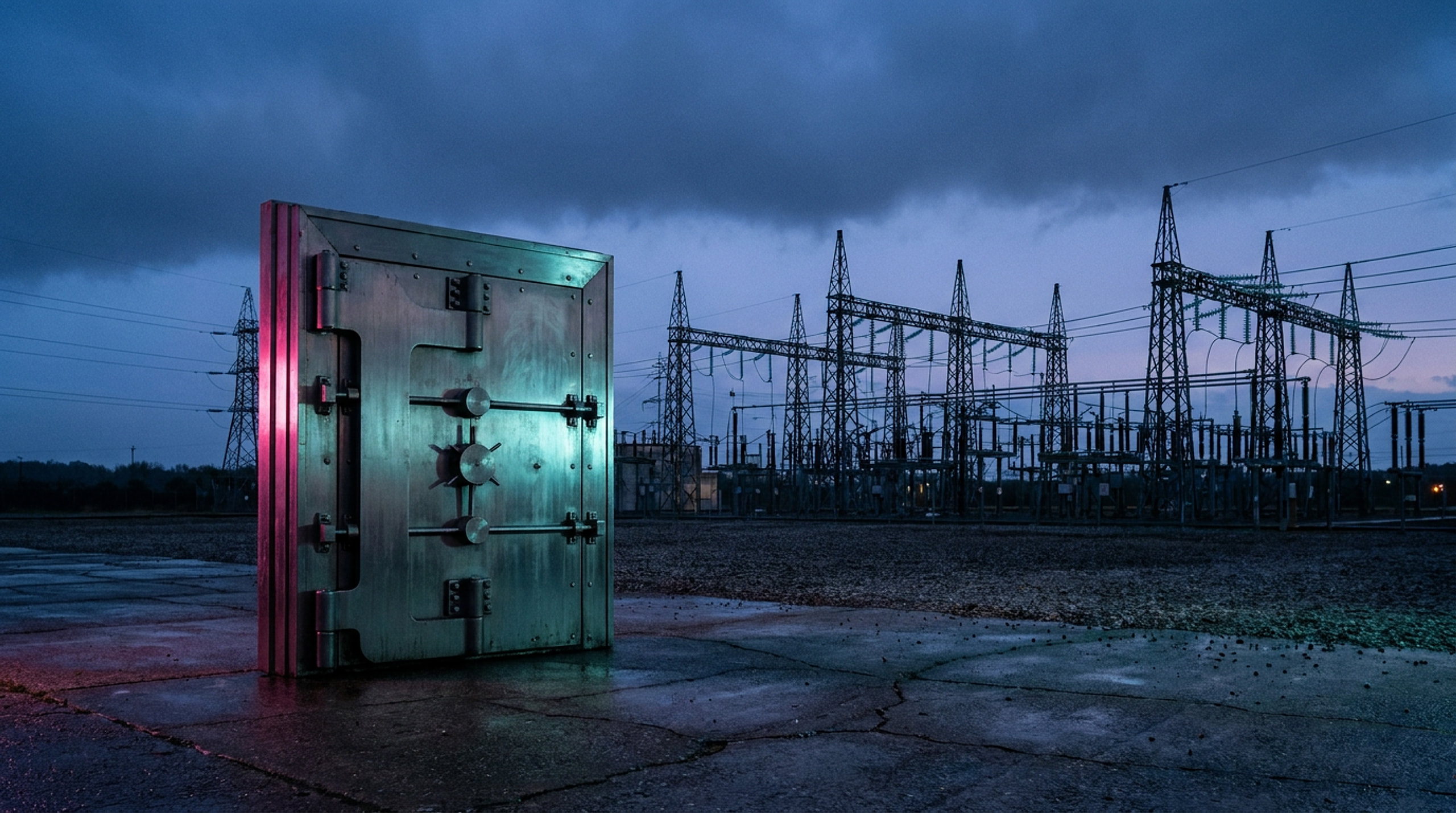
CI Fortify from CISA recommends that the operators of critical infrastructure must prepare themselves for forced isolation and quick recovery
Insights from Mark Fermor on OT, ICS, and the underlying storage layer.