BreakingNews
1Password confirms breach after attacker used an employee GitHub account
1Password says an attacker used an employee's corporate GitHub account to copy source code, reach its CI/CD system and push malicious code to backend services, taking names, email addresses and other account data for a subset of customers. The company says vault contents and the keys that protect them were not accessed. What is known, what is not, and what organisations should learn.

Mark FermorCTO, CMO and Founder, Firevault
Published 26 November 2026 · 5 min read
What happened
Password manager 1Password disclosed on Wednesday 25 November 2026 that an attacker had gained access to some of its backend systems and taken a limited amount of customer account information, The Hacker News reported.
According to the company, the incident began when an unknown attacker gained access to an employee's corporate GitHub account. 1Password started investigating suspicious activity on 19 November 2026.
The attacker reportedly used that account to:
- copy source code from private repositories;
- gain access to 1Password's CI/CD system, the pipeline that builds and releases its software;
- push malicious code to backend services, which then downloaded administrative data about customers.
What was taken
1Password says the data accessed for a subset of customers included:
- names and email addresses;
- account and user identifiers, including account creation and last sign-in times;
- public keys;
- Secure Remote Password (SRP) protocol parameters;
- tokens contained in some emailed links for invitations, provisioning and account recovery;
- non-secret internal account metadata, such as version and file identifiers.
What 1Password says was not taken
The company says no vault contents were accessed or compromised. That includes passwords, secrets and other vault items, account recovery keys and the keys that secure them. "Your vault secrets are encrypted with keys that only you hold, so we can't access them, and neither can an attacker who gets into our servers," the company said.
It also says the tokens in emailed links cannot be used on their own to enter an account, because access also requires single sign-on or a six-digit verification code sent to the registered email address. A small number of affected users have been notified individually. 1Password says customers do not need to take any action, but should watch for unexpected phishing attempts.
On its source code, the company said: "Our source code is not customer data, and contains no user secrets. There is no impact to 1Password's services, availability, or product security."
How 1Password responded
1Password says it has:
- disabled the affected GitHub account and revoked the stolen token;
- hardened GitHub, CI/CD and endpoint controls;
- restored clean versions of the affected service;
- rotated internal credentials;
- lengthened the codes in invitation and recovery emails from six digits to ten characters, as a precaution.
What is not known
- How the attacker gained access to the employee's GitHub account.
- How many customers are in the affected subset.
- How long the malicious code ran in backend services before it was found.
- Who the attacker is. No group has been publicly named.
Why this matters
The encryption design appears to have done its job: the attacker reached servers but, according to 1Password, not the secrets inside customer vaults. That is the point of holding keys only on the customer side.
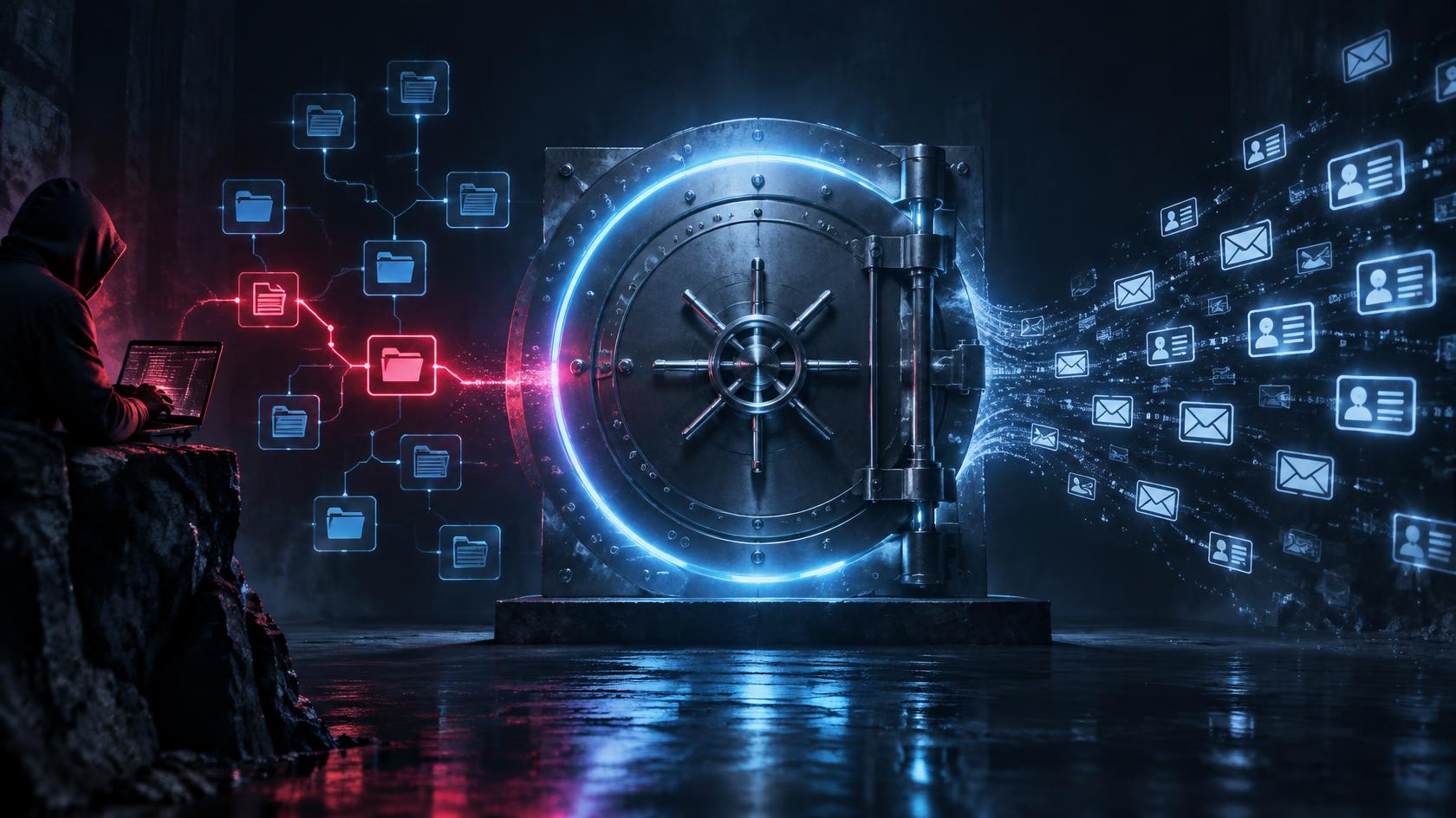
The route in is the wider lesson. One developer account was enough to copy private code, reach the build pipeline and change what production systems ran. Source repositories and CI/CD systems are permanently connected to the services they deploy, and the accounts that reach them are some of the most valuable credentials an organisation holds.
The stolen data still has value. Names, email addresses and knowledge that someone uses 1Password give attackers exactly what they need for convincing phishing messages, including fake "security alert" emails that ask people to re-enter a master password or recovery details.
If a path to production is always open, one stolen account can use it.
What 1Password customers can do
- Treat unexpected emails with suspicion. Do not follow links in messages about this incident. Go to 1Password directly.
- Never share your master password or Secret Key. 1Password will not ask for them by email.
- Check for an individual notice. The company says affected users have been contacted directly.
What organisations should learn
- Protect developer accounts as privileged access. Repository and pipeline accounts should have strong, phishing-resistant multi-factor authentication and short-lived tokens.
- Separate code access from release access. Being able to read a repository should not mean being able to push to production.
- Make deployment paths exist only when needed. Pipelines that change live systems should open for approved releases, not stay permanently reachable.
- Watch what production runs. Alert on unexpected changes to backend services, not only on unusual sign-ins.
- Keep keys away from servers. Customer-held encryption limited what this attacker could take.
Where Firevault fits
Firevault does not provide password management, and would not have stopped the theft of the employee's GitHub account.
Control by Firevault applies just-in-time access to the connections that administrators, pipelines and integrations hold into an environment, so those paths exist when approved work needs them and are physically disconnected the rest of the time.
Offline Secure Storage® keeps selected critical data and recovery copies on dedicated hardware that is physically disconnected and offline by default. If data is connected, it can be reached. A clean, offline copy of source code and build configuration also gives an organisation a known good state to restore from when it cannot be sure what was changed.
For other recent supplier and software incidents, read about the Optimizely supply-chain attack and Samsung's advertising vendor breach.
Lock the vault. Disconnect the path. Protect what matters.
Mark Fermor is CTO, CMO and Founder of Firevault. Learn why offline storage is different or talk to the team.
Questions
Yes. 1Password disclosed on 25 November 2026 that an attacker used an employee's corporate GitHub account to reach some backend systems and take limited customer account information. It began investigating on 19 November 2026.
According to 1Password, no. The company says no vault contents, passwords, secrets, account recovery keys or the keys that secure them were accessed, because vault secrets are encrypted with keys only the customer holds.
For a subset of customers, 1Password says the attacker took names, email addresses, account and user identifiers including sign-in times, public keys, Secure Remote Password parameters, tokens in some emailed invitation, provisioning and recovery links, and non-secret internal metadata.
1Password says no action is required, but customers should be wary of phishing. Do not follow links in unexpected emails about the incident, and never share a master password or Secret Key.
Not the theft of the GitHub account. Control by Firevault limits the connections that administrators and pipelines hold into an environment to approved, just-in-time windows, and Offline Secure Storage keeps a clean, physically disconnected copy of critical data and code to recover from.
About the author
Mark FermorCTO, CMO and Founder of Firevault. Mark writes on physical control, offline storage and the incidents that show why both matter.

Why #OSS
Keep a clean copy out of reach.
Offline Secure Storage® keeps one copy physically disconnected at the hardware level between sessions.

Control
Govern the paths attackers depend on.
Physical, out-of-band control of selected network paths, composed into Control Plans and industry Blueprints.

Ready to start?
Create your Vault online.
Business Vaults from £360 a month inc VAT, on a 36-month commitment.