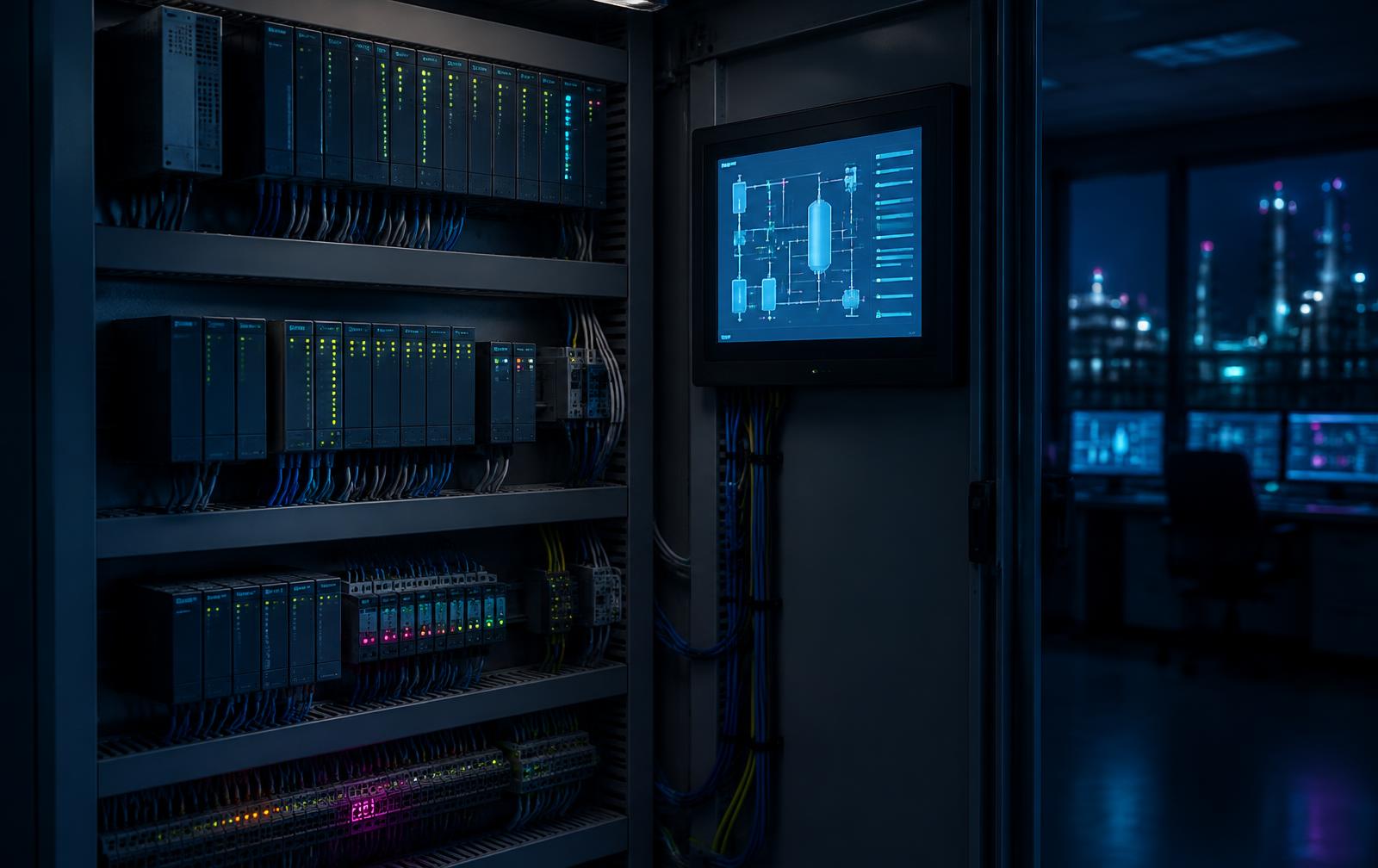
 Controlled Industrial Control Systems
French supermarket chains
- Related threat
- Unauthorised PLC programming access
- What was reported
- A cyber attack was reported to have affected refrigeration equipment at supermarkets in France.
- Sector
- Retail & Supermarkets
Controlled Industrial Control Systems
Industrial controllers can change physical conditions. An unauthorised command, configuration change or engineering session may affect production, temperatures, pressure or equipment behaviour.
Which routes can reach your PLCs, and do they need to stay connected?
Incident
Path exposed
Outcome
Control taken
Why connection control matters
A changed set point can spoil stock, stop a line or put equipment outside safe limits. Cutting communications carelessly can also remove the monitoring and alarms operators rely on.
PLCs and controllers are often reachable through vendor modems, cellular routers, building-management gateways or a standing IT/OT link. Many were never designed to defend themselves, and a remote route can change set points, logic or alarms.
Reported incidents that show these threats
These incidents show how a connection path can shape what happens next. They are not claims about what any single control would have prevented.
How Control responds
The assessed controller-access route is governed physically, with local control and safety functions remaining subject to separate engineering validation.
Control access
Remote engineering routes are unavailable by default and connect just-in-time for a set window after independent approval.
Threats it answers
Control exposure
On-site operator stations keep full control. Remote routes the process does not need are disconnected.
Threats it answers
Control intervention
On an agreed decision, the selected route into the controller network is physically disconnected until an authorised release.
Threats it answers
Compromised engineering workstationSupplier gateway exploited
Threat explorer
Choose a threat, then step through how Control changes the outcome: normal operation, the threat, the authorised intervention, the controlled state, and verification and restoration.
Choose a threat
See how Control changes the outcome1 / 5 Normal operation
A refrigeration controller needs remote engineering from its supplier, and the supplier connection stays exposed between visits.
Left outside the intervention Local control, safety functions and alarms keep running, subject to separate engineering validation.
Concept illustration. Commanded, reported and independently verified states are shown separately because they are not the same thing, and what can be verified depends on your deployment. Disconnecting a selected path changes what can use that path. On its own, it does not contain an incident across a whole environment, and routes outside the plan, such as wireless or cellular links, need their own controls.
Control Blueprints
How Controlled Industrial Control Systems applies in the industries where these connections matter most. Each Blueprint maps real systems, suppliers and operating constraints.
Protect the cold chain. Control the connection.
Read the Retail & Supermarkets Blueprint
Treatment and distribution SCADA.
Read the Water Blueprint
Electricity network control systems.
Read the Energy Blueprint
DCS, SCADA and refinery control paths.
Read the Oil & Gas BlueprintRelated Control Plans
Third-Party Access ControlIndustrial Engineering AccessScheduled Critical MaintenanceIT/OT Boundary Protection
Fifteen Blueprints are published. Each deployment is designed around your own estate.
Firevault, as featured in





How Control works
Your tools detect, your people and policies decide, and Control changes the connection state of the selected path. Here is what that rests on.
Control changes the connection state of a selected path at Layer 1: connected, or physically disconnected. It does not inspect or alter the traffic on it.
Commands reach each control point over a configured command path, kept separate from the network being controlled. How each point behaves if that path is lost is agreed and tested.
Who can connect, disconnect or release each path is agreed in advance: named people, more than one approval where it matters, or rules and high-confidence alerts you set.
Commands, approvals and reported states can be recorded for your deployment, so you can show what changed, when, and on whose authority.
Deployment and evidence
Confirm the selected paths, supporting systems and failure behaviour in the actual environment. No generic drawing can substitute for this assessment.
Controllers change physical conditions. Local control, interlocks and safety functions stay outside the intervention and remain subject to separate engineering validation.
Control governs the selected paths in your plan. It does not inspect traffic, and wireless, cellular and other routes outside the plan need their own controls.
No. They detect, filter and investigate. Control adds a physical way to act on the selected paths when your people, or rules you have agreed, decide to.
No. It changes whether a selected path is connected. It does not read or change what travels on it.
It can, which is why the dependencies, safe states and restoration steps for each path are agreed and tested with your operations and safety owners before anything goes live.
It controls selected connectivity. Disconnecting a path removes the connections an AI system was using and gives people an independent way to intervene. It does not necessarily stop a model or process running locally.
No. Control governs connections. Keeping data physically offline is Offline Secure Storage®, a separate Firevault product that can sit alongside Control.
Yes. Start with one connection: a supplier route, an IT–OT crossing, or the path to one critical system.
Your next step
Begin with one engineering connection. Agree its purpose, intervention authority, dependencies and the checks that make restoration acceptable.
Discuss your Control requirements